3 hr 30 min
Toyosu Tuna Auction & Tsukiji Market Morning Food Tour
- Entry ticket
- Mobile voucher
- Valid same day
- Free cancellation
Toyosu Fish Market Tour Auction — Reserved Early Access
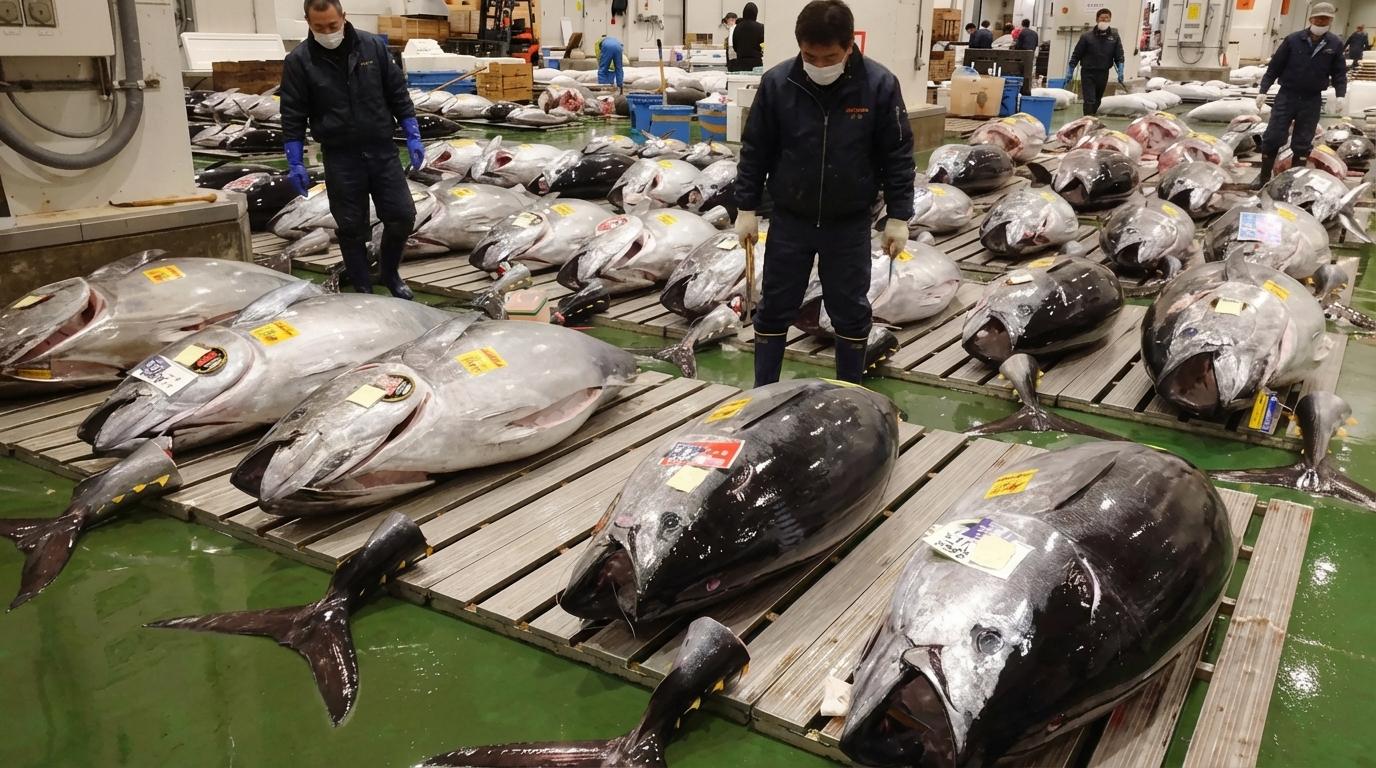
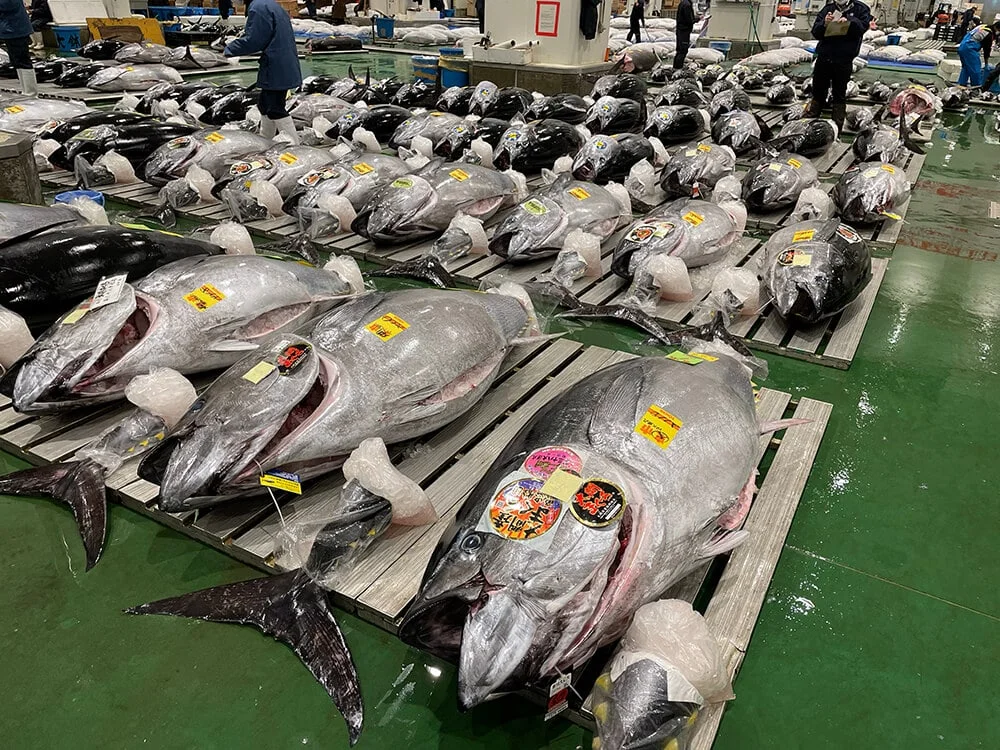
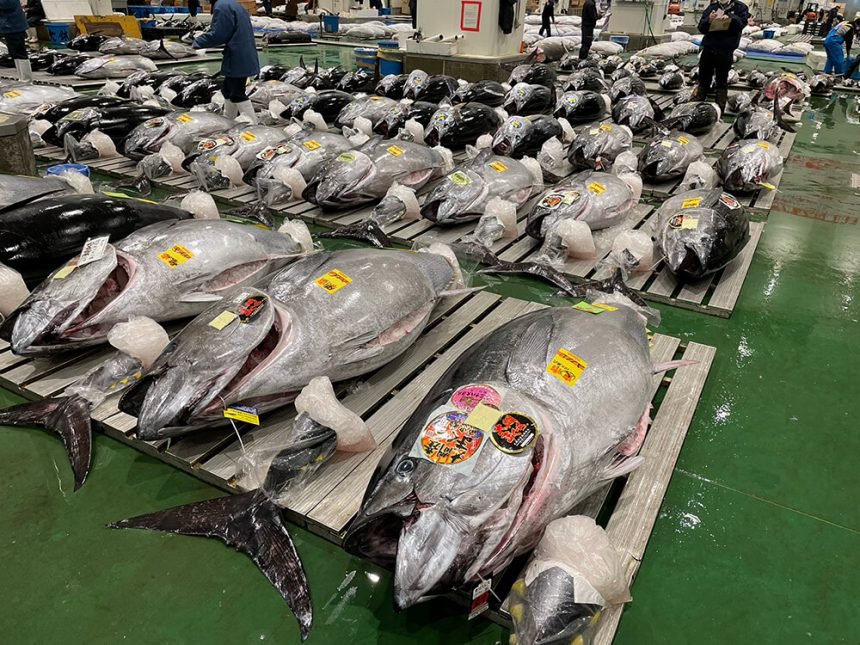
Witness the world's largest seafood auction, where dawn breaks over frozen tuna the size of motorcycles.
Compare fares, pick the fit — all bookings are mobile-voucher and eligible for free cancellation where shown.
3 hr 30 min
3 hr 30 min
3 hr
Choosing how to experience a toyosu fish market tour auction depends on whether you prefer flexible independent viewing or a premium up-close perspective through the official lottery system. Understanding these two primary access methods for this Tokyo landmark ensures you can witness the morning activities according to your own travel schedule.
| Observation Gallery Walkway Access |
Top pick Special Observation Deck Lottery Entry |
|
|---|---|---|
| Entrance Fee | 0 JPY | 0 JPY |
| Access Method | Open entry (no ticket) | Advance lottery registration |
| Viewing Proximity | Distanced (upper level) | Close-up (auction floor level) |
| Capacity | Unlimited | Limited to 100 people daily |
| Audio Experience | Glass-enclosed (via speaker) | Open glass (audible auction) |
| Best for | First-timers with flexibility | Serious photography and culture seekers |
| See tickets & prices |
Verdict: For the most immersive toyosu fish market tour auction tickets, apply for the special observation deck lottery, while casual observers can utilize the readily available gallery.
Worth it for serious seafood enthusiasts only
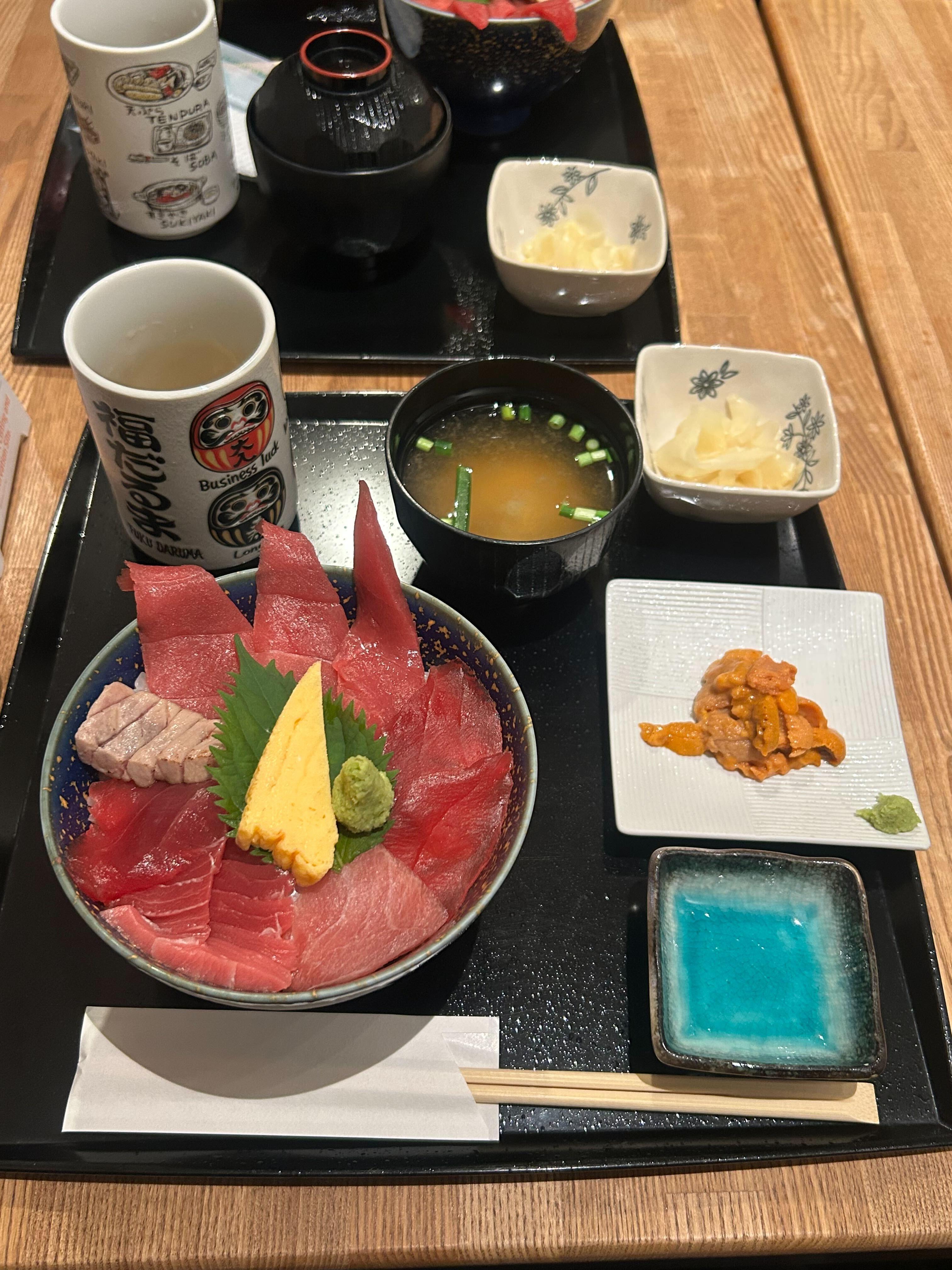
The toyosu fish market tour auction delivers an authentic glimpse of Tokyo's wholesale seafood operation, but requires serious commitment. You'll wake before dawn to witness the famous tuna auctions between 05:30 and 06:30, watching wholesalers bid on massive frozen tuna through observation windows. Guided tours bundle auction viewing with breakfast at Tsukiji's outer market, turning the early start into a complete morning experience. The market itself is free to enter—tours add value through reserved auction access, English context about bidding traditions, and efficient routing through both Toyosu's modern facilities and Tsukiji's street food stalls. This works for visitors who want deep context on Tokyo's seafood supply chain and don't mind sacrificing sleep. Casual tourists seeking Instagram moments or a quick market browse should skip the auction entirely and visit Toyosu's wholesale shops after 09:00, or head straight to Tsukiji's outer market for sushi breakfast without the 05:00 alarm.
Bottom line: Book a toyosu fish market tour auction tour if you're genuinely interested in seafood commerce; otherwise, sleep in and visit Tsukiji's outer market at a reasonable hour.
They complement each other; most visitors who do both call Toyosu the superior choice for a raw, industry-focused wholesale spectacle, while Tsukiji is the more thrilling neighborhood for a casual culinary tour.
|
Top pick Toyosu Market Auction |
Tsukiji Outer Market | |
|---|---|---|
| Primary focus | Live tuna wholesale auction | Street food and retail grazing |
| Best arrival window | 05:00–06:30 | 07:00–09:00 |
| Entry fee | 0 JPY | 0 JPY |
| Vibe | Clinical, industrial, professional | Lively, historical, crowded |
| Activities | Observation deck viewing | Food tasting and knife shopping |
| Duration | 1–2 hours | 2–3 hours |
| Opening days | Monday–Saturday | Monday–Saturday |
| See tickets & prices |
Verdict: If you seek the high-energy spectacle of professional fish bidding, prioritize the Toyosu fish market tour auction; if you prefer an accessible morning of eating local delicacies, opt for the Tsukiji outer market tour.
Hand-picked experiences loved by thousands of travelers
3 hours 30 minutes
Free Cancellation
Experience Tokyo's legendary seafood markets before dawn, from high-stakes tuna bidding to fresh breakfast
3 hours
Free Cancellation
Experience Tokyo's premier seafood market before dawn, watch live tuna auctions, and savor a traditional breakfast
2 hours 30 minutes
Free Cancellation
Discover Tokyo's premier seafood market, savor authentic Japanese dishes, and unwind in a bayfront onsen.
3 hours 30 minutes
Free Cancellation
Experience Tokyo's seafood heart with an early morning auction viewing and market exploration plus premium sushi
3 hours
Free Cancellation
Dive into digital art and Tokyo's famous seafood market with expert commentary on this half-day adventure
6.5 hours
Free Cancellation
Explore one of the globe's premier seafood markets, then craft authentic sushi in a Shinjuku kitchen.
7 hours
Free Cancellation
Explore the working fish market floor, craft authentic sushi styles, and participate in a traditional tea ritual
2 hours
Free Cancellation
Discover Tokyo's legendary fish market with a local guide, shrine visit, fresh tuna bento, and sake tasting
Arrive at Toyosu Station and walk to the market
Watch the tuna auction from the observation deck
Explore the wholesale fish and produce buildings
The primary observation area where wholesale buyers bid on high-quality tuna in the early morning hours.
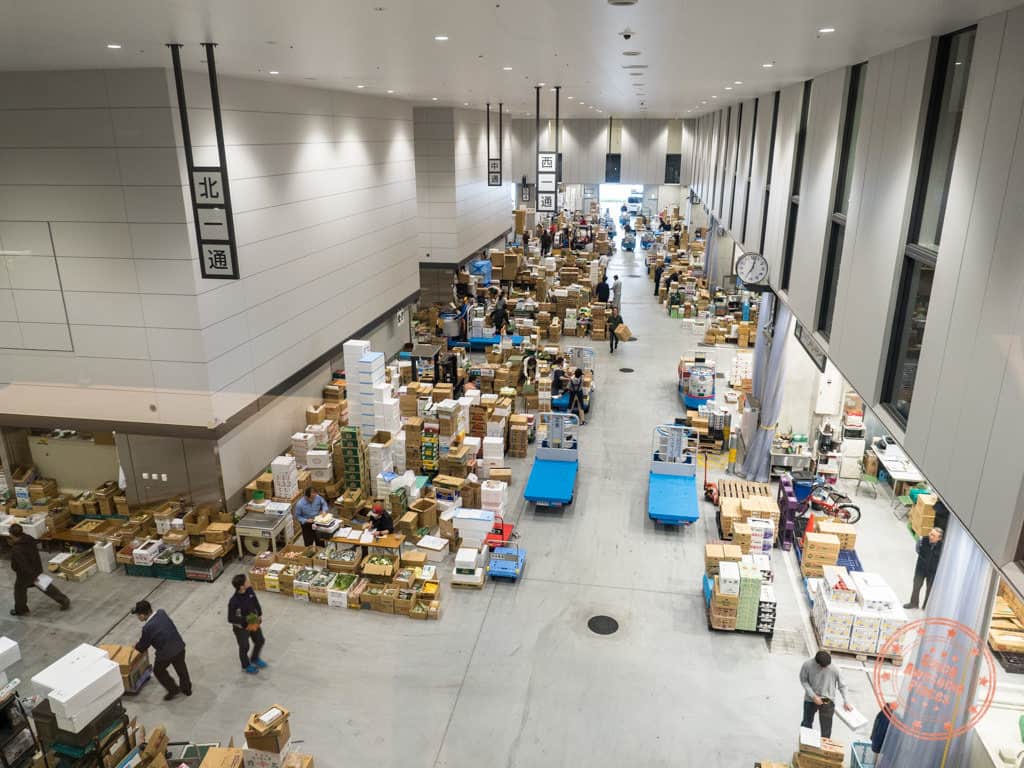
A massive facility housing hundreds of vendors showcasing the day's catch.
Features a variety of fruits and vegetables sourced from across Japan.
Elevated paths that allow visitors to view the market floor without disrupting trade.
An outdoor space offering views of the Tokyo Bay area.
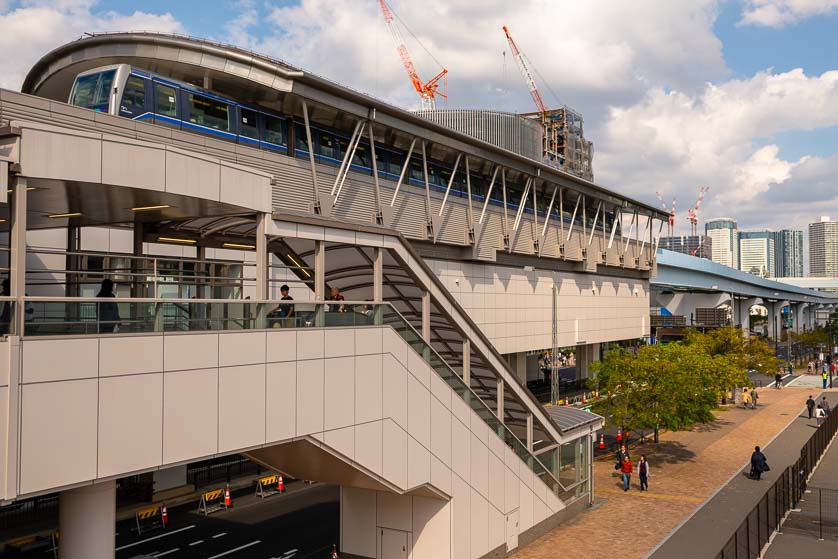
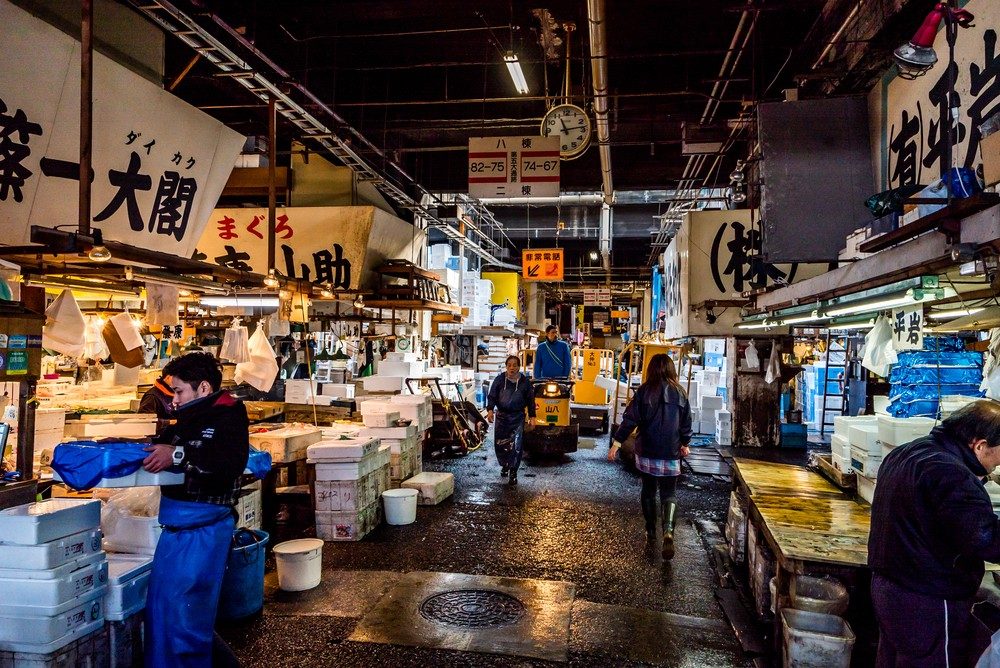
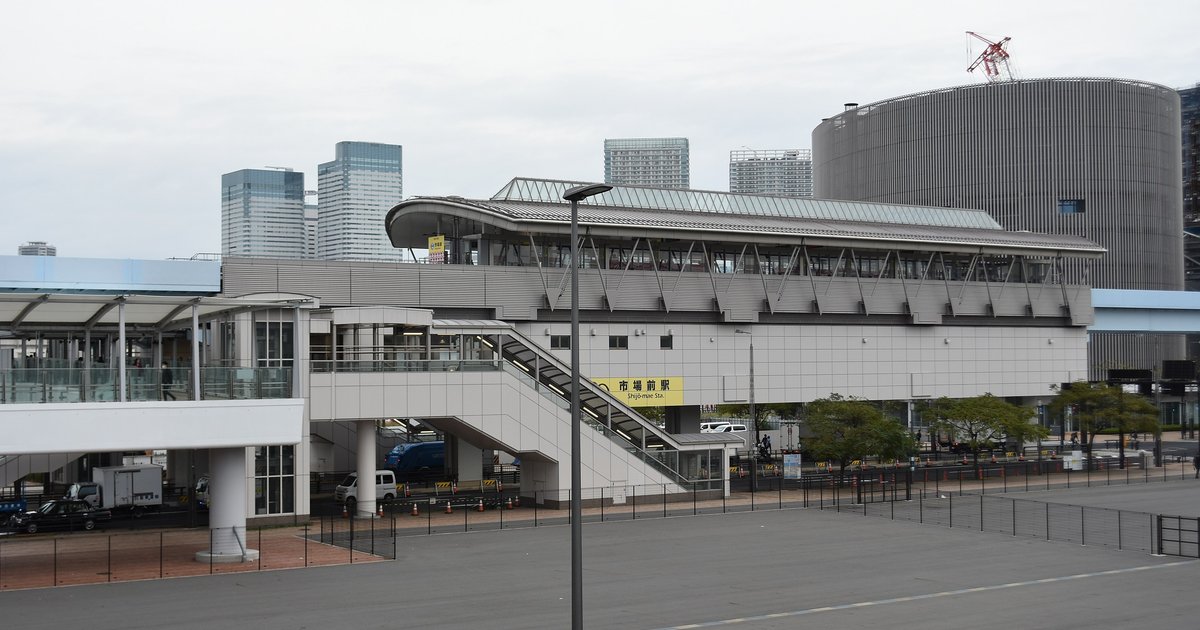
You meet your guide in the pre-dawn darkness outside Shijo-mae Station, where the Yurikamome Line deposits you on Toyosu's eastern edge. The group walks through empty loading zones toward the tuna warehouse, passing shuttered forklift bays and refrigerated trailers idling with their engines running.
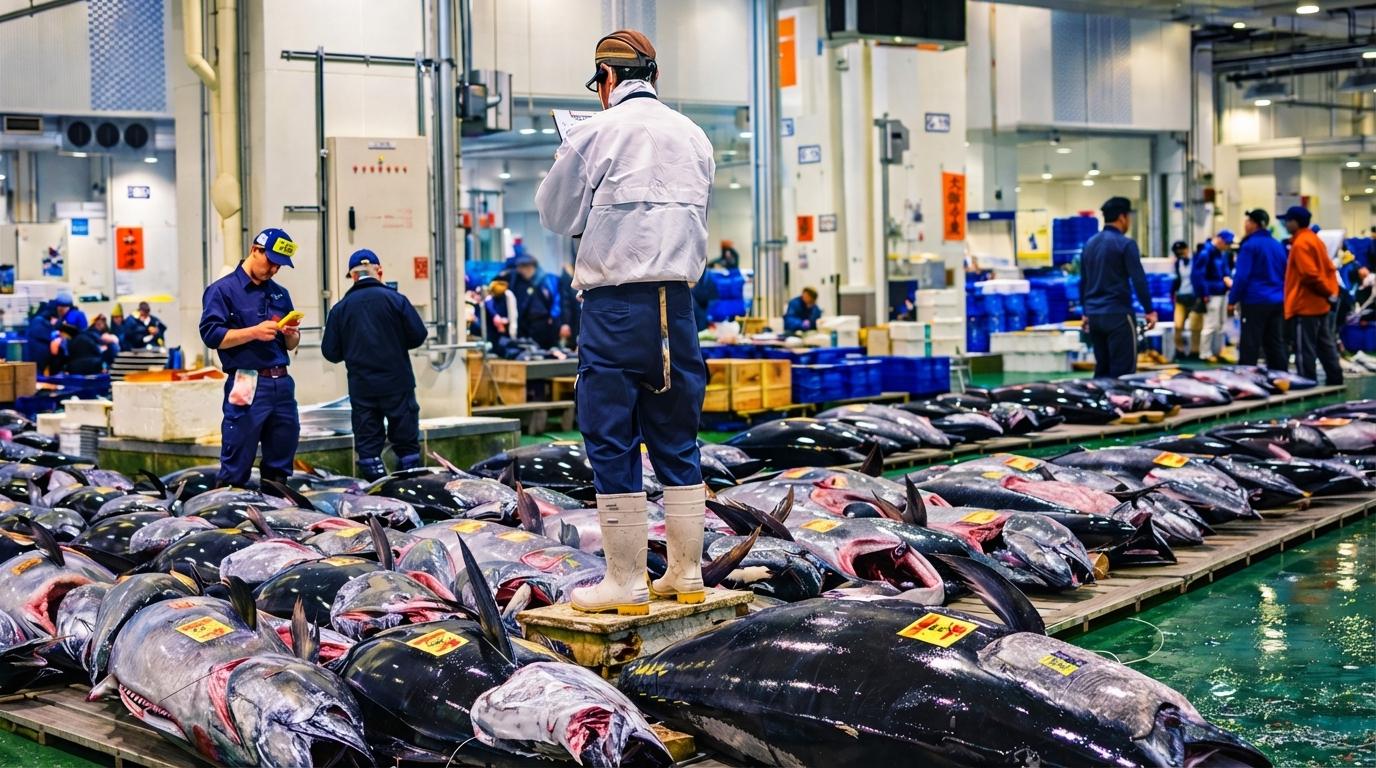
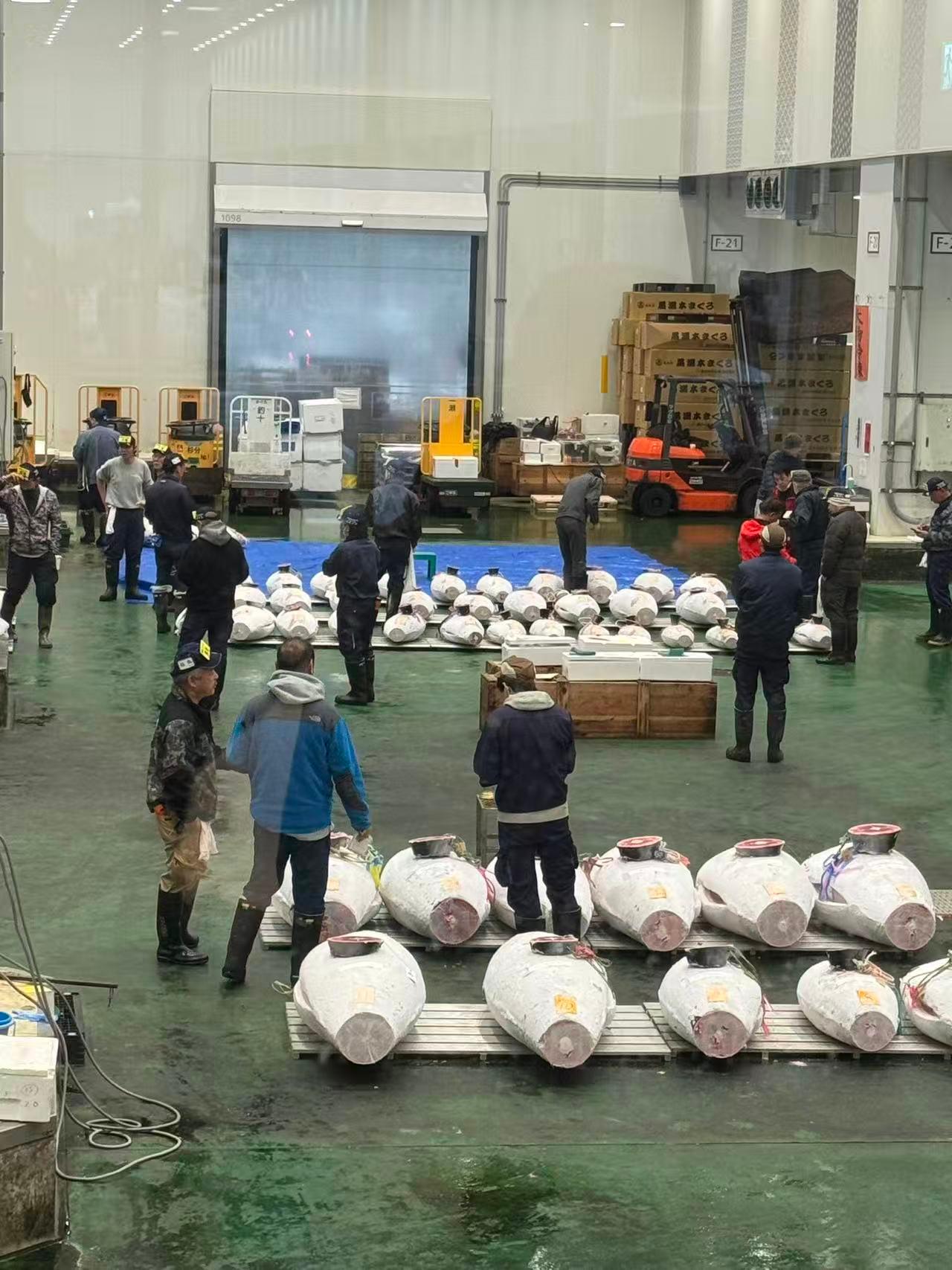
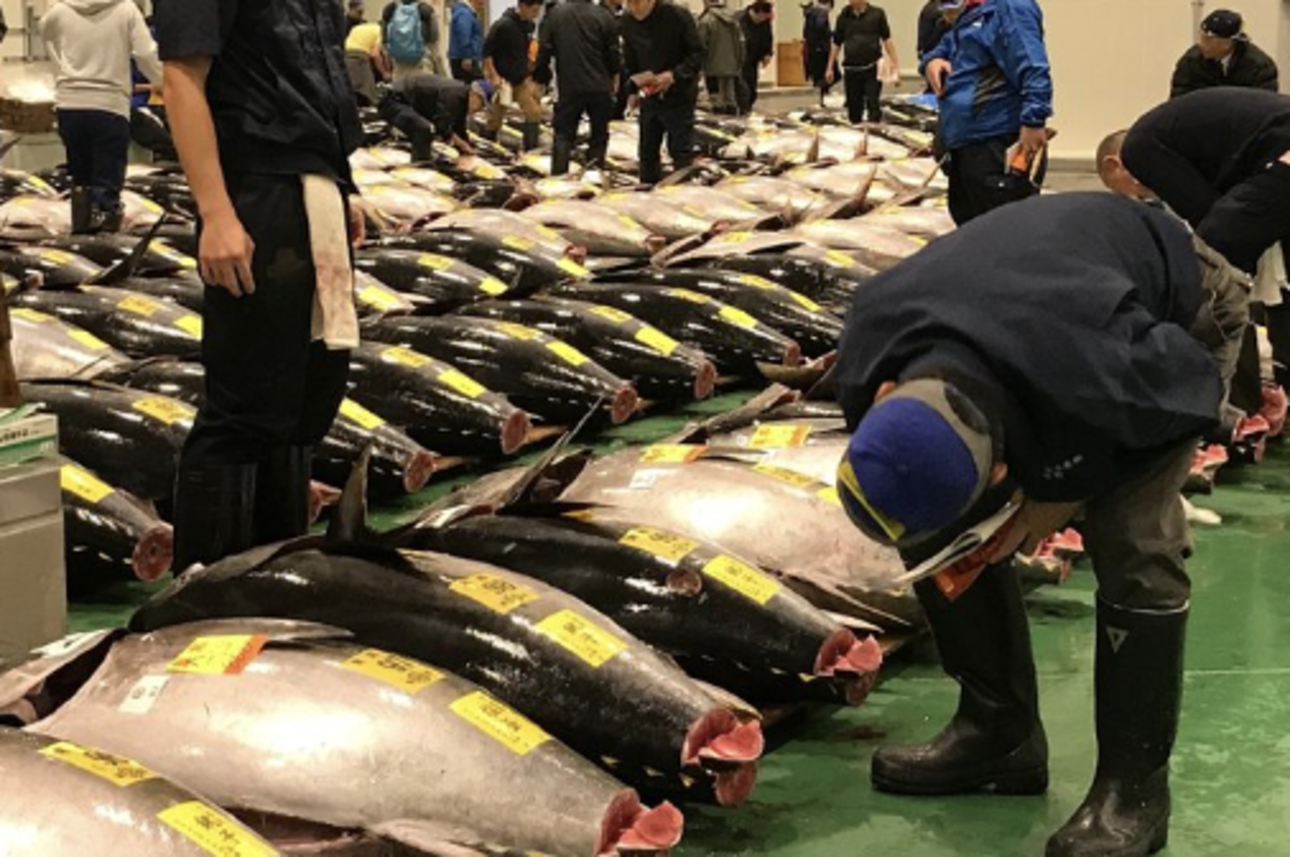
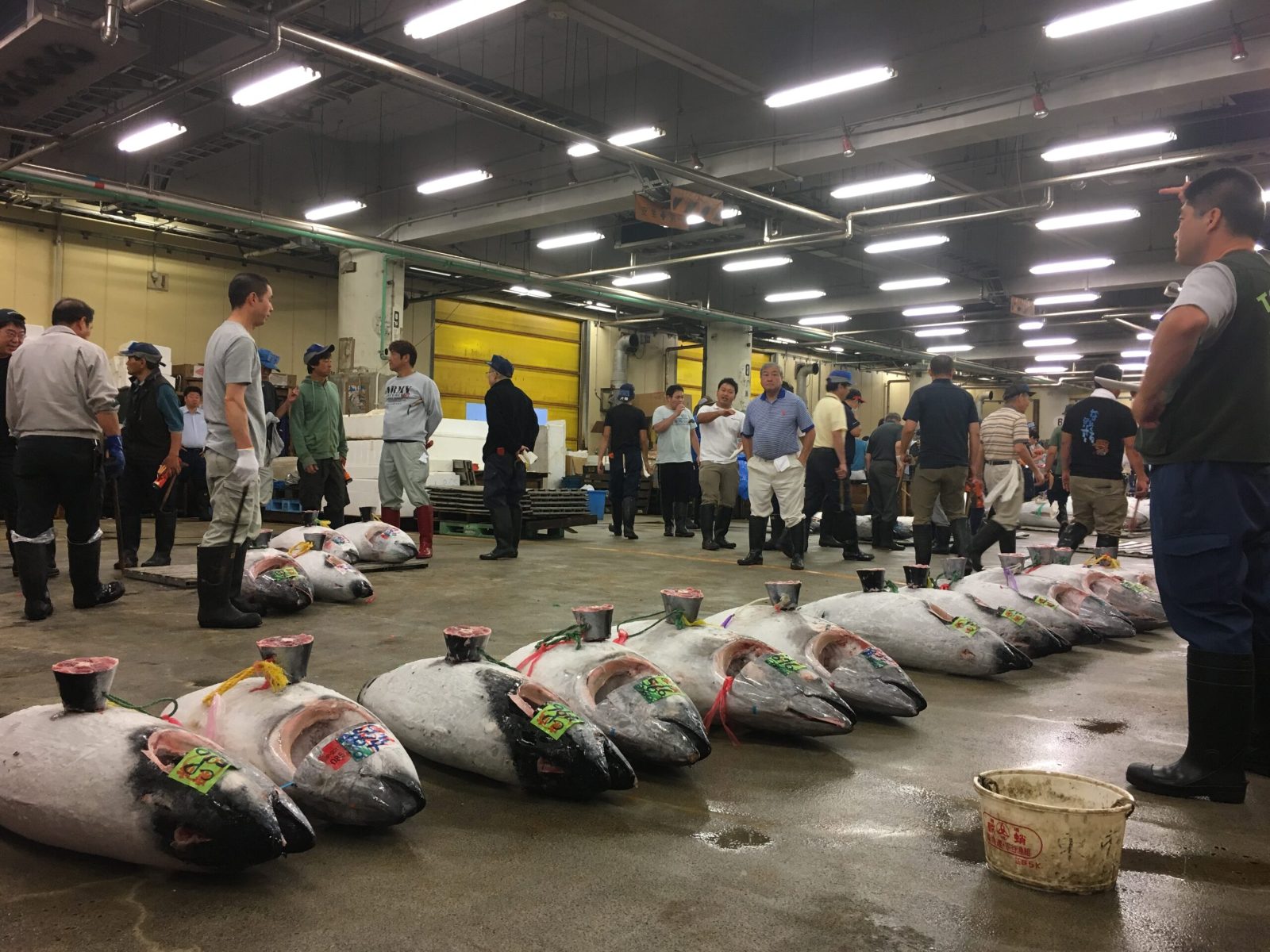
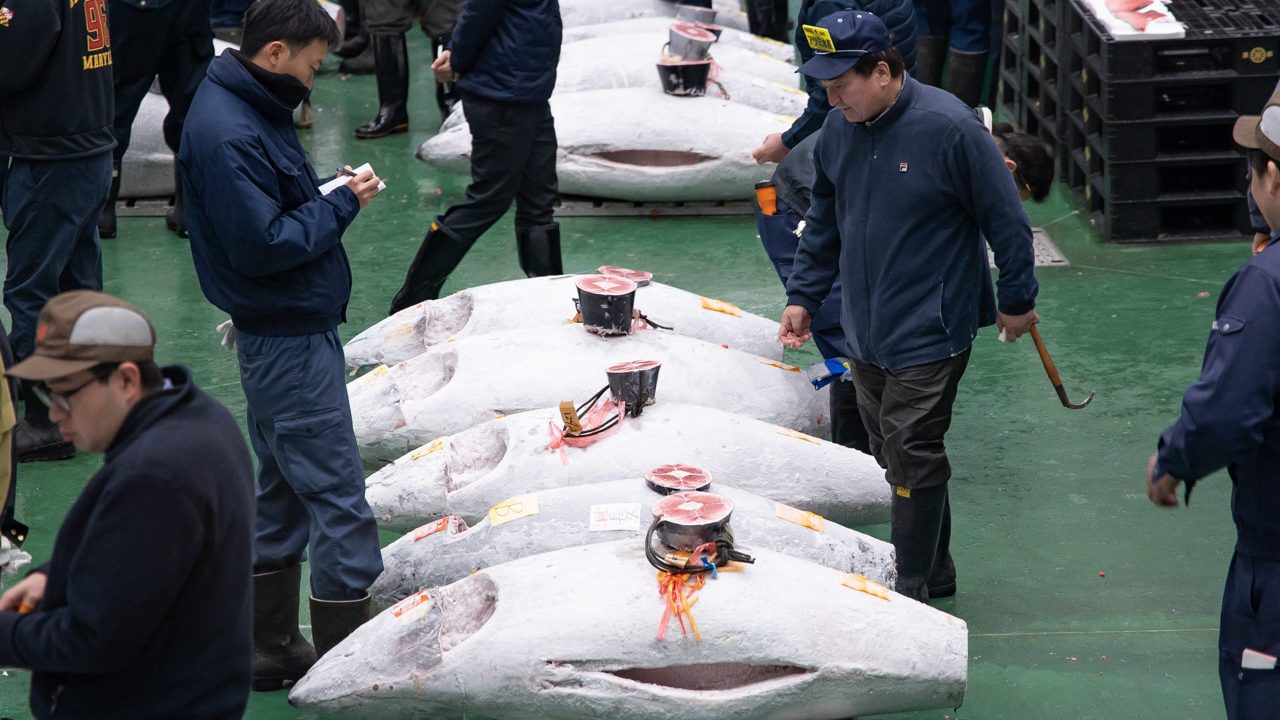
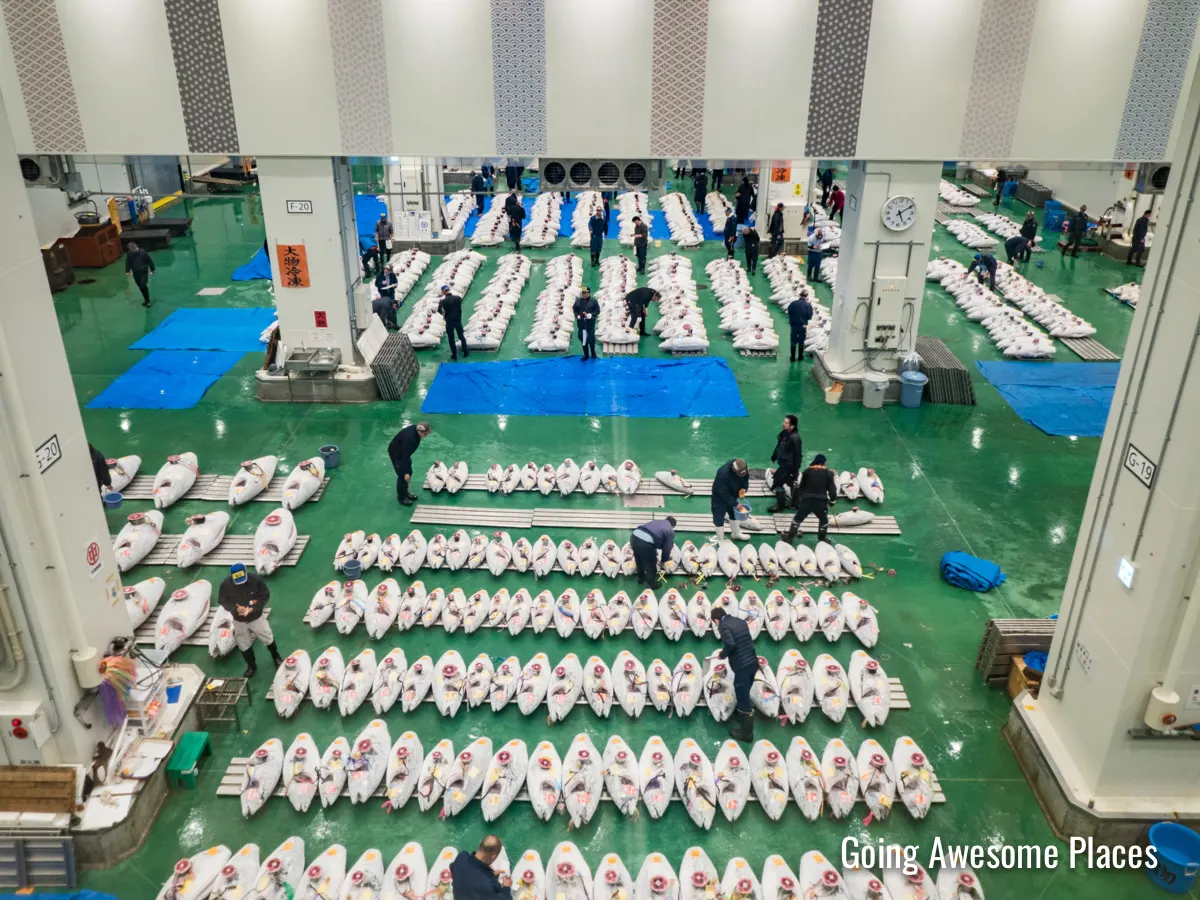
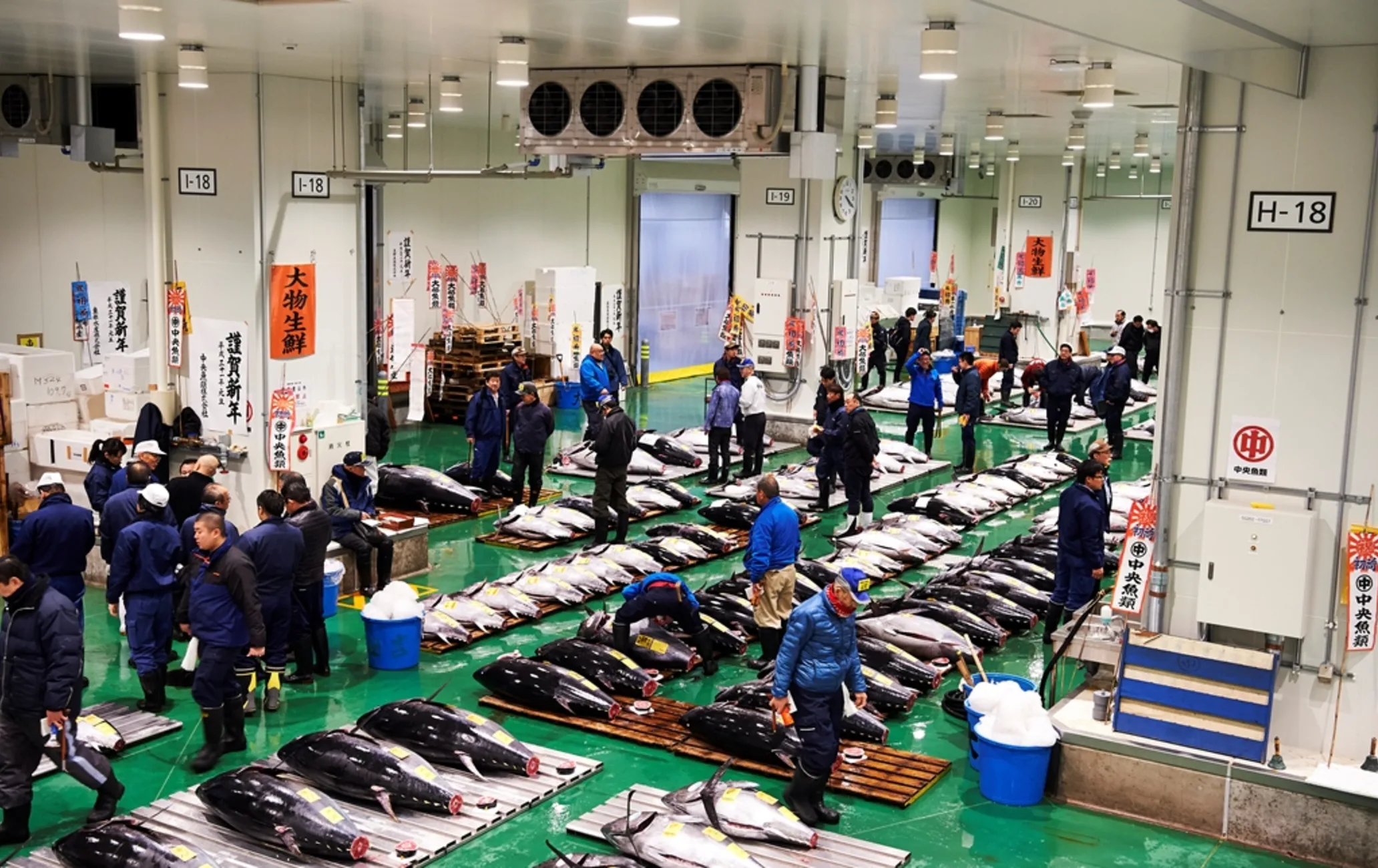
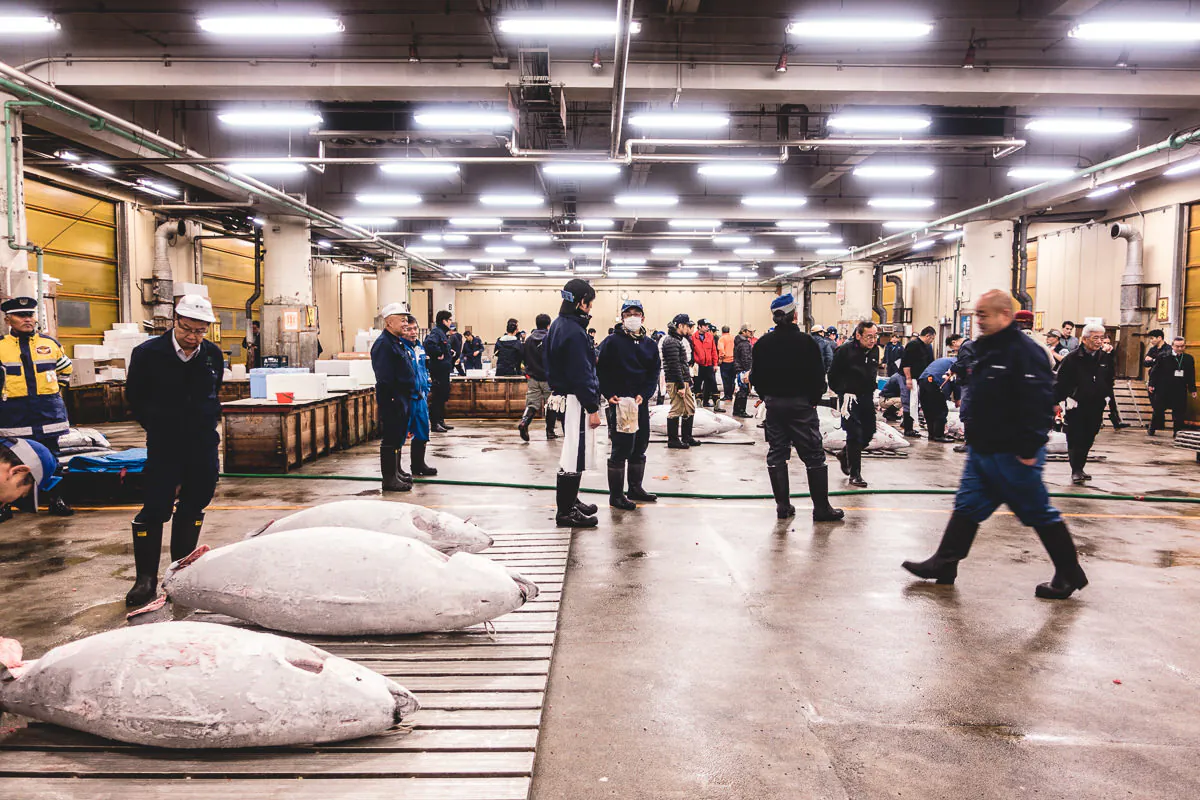
Inside, you climb to the observation deck — a narrow corridor with floor-to-ceiling glass overlooking the auction floor. Below, rows of frozen tuna lie on pallets, each tagged with origin and weight. Wholesalers in rubber boots crouch beside specimens, shining flashlights into tail cuts to assess fat content.
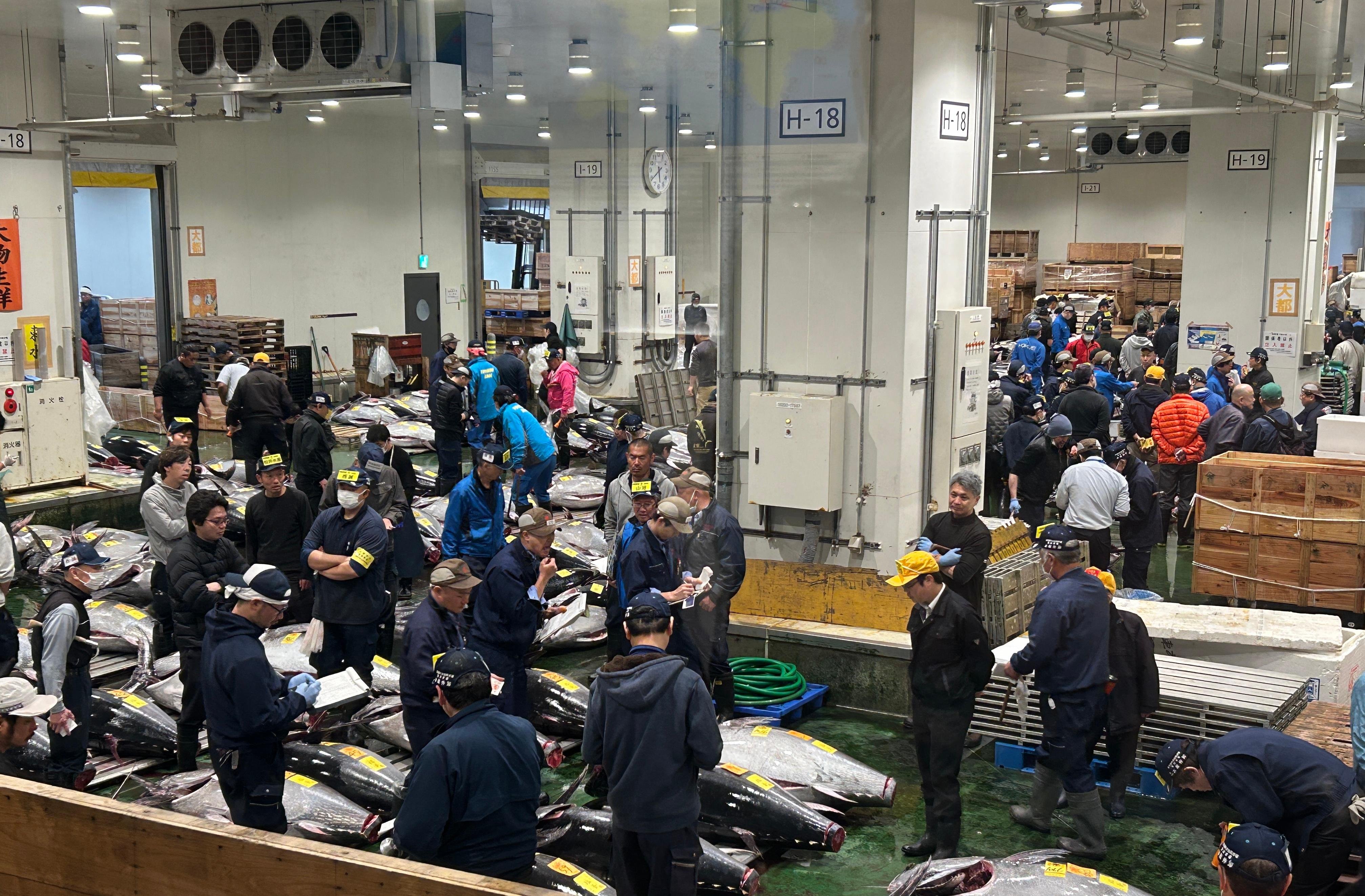
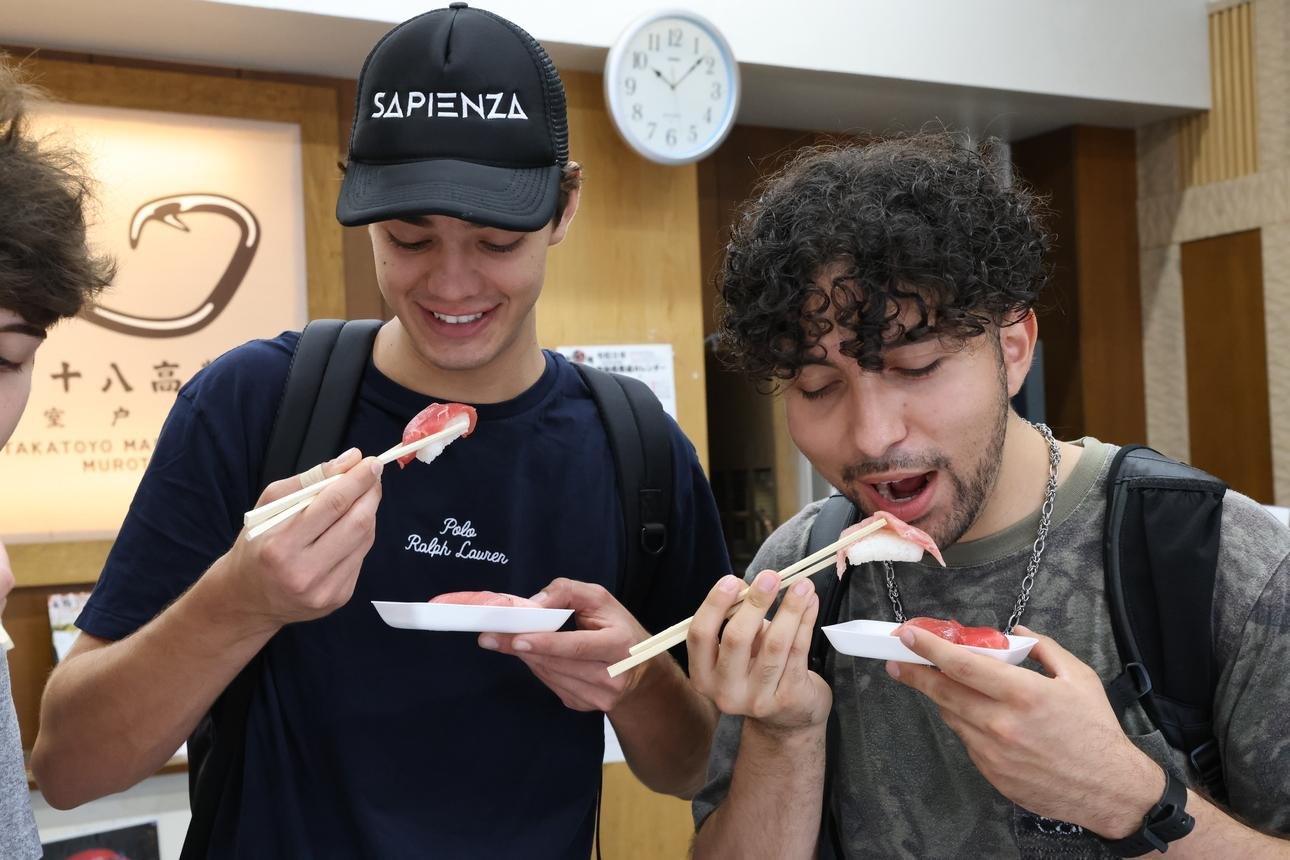
At 5:30 AM, the auctioneer takes his position on a raised platform and begins the call. Buyers respond with subtle finger gestures — a raised index finger, a sideways hand — while assistants record prices on clipboards. The entire auction for a single fish lasts under a minute. You watch a 200-kilogram bluefin sell for ¥1.8 million, then see it hoisted onto a cart and wheeled toward the processing stalls. After the auction, your guide leads you through the intermediate wholesaler section, where nakaoroshi in white coats portion tuna with band saws, the smell of brine and fish oil sharp in the refrigerated air. Some tours conclude with breakfast at a sushi counter inside the market, where chefs serve slices cut from that morning's catch.
All the details about your upcoming adventure in one place
When Tokyo's Metropolitan Central Wholesale Market relocated from Tsukiji to Toyosu in October 2018, it transferred more than fish — it moved the nerve center of Japan's seafood economy to a purpose-built, 40-hectare facility on reclaimed land in Koto Ward.
The Toyosu Fish Market Tour Auction grants visitors regulated access to the tuna auction floor, where wholesalers evaluate specimens by slicing tail cross-sections with handsaws and inspecting the meat's marbling under fluorescent light. The auction runs six mornings a week, handling roughly 1,600 tons of seafood daily and generating annual transactions exceeding ¥600 billion.
The market's three refrigerated buildings — dedicated to tuna and swordfish, general seafood, and produce — operate under a closed-facility model that restricts public entry to designated observation decks and pre-dawn guided tours. The tuna auction begins between 5:30 and 6:30 AM, depending on the morning's inventory and grading schedule. Visitors on Toyosu fish market tour auction tours typically arrive by 5:00 AM to secure observation positions before bidding commences. The auction floor sits two stories below the public walkway, separated by reinforced glass that mutes the rapid-fire hand signals and price calls conducted entirely in Japanese wholesale shorthand.
Toyosu's design prioritizes hygiene and temperature control over the atmospheric chaos of its predecessor. Concrete floors slope toward central drains, ceiling-mounted refrigeration units maintain the tuna warehouse at 10°C, and forklifts navigate wide aisles marked by yellow safety lines. The facility processes bluefin, bigeye, and yellowfin tuna flown in from as far as Boston and the Mediterranean, though the highest-grade specimens still come from Oma in Aomori Prefecture. The record auction price — ¥333.6 million for a single 278-kilogram bluefin in January 2019 — underscores the market's role as both commercial engine and cultural theater.
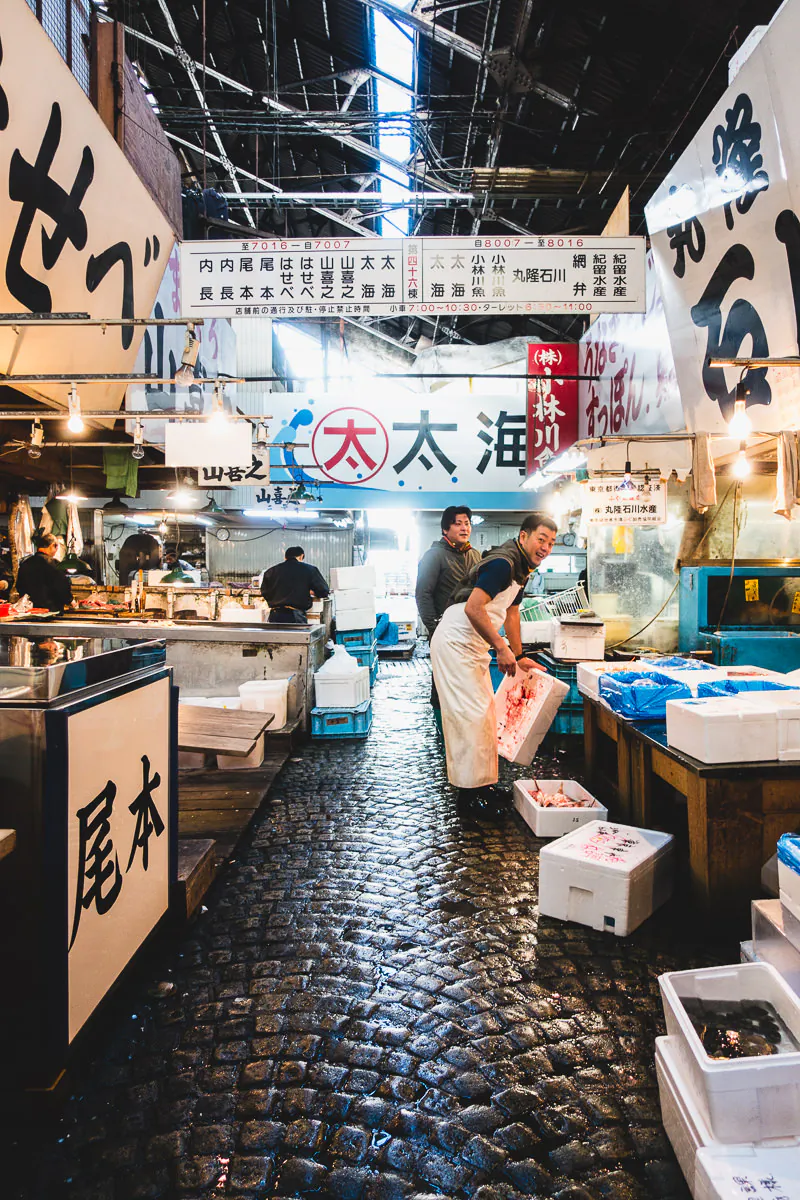
Beyond the auction, intermediate wholesalers (nakaoroshi) operate stalls in the adjacent market buildings, filleting purchases and reselling to restaurateurs who arrive by van before sunrise. The retail Fisherman's Wharf annex opens at 10:00 AM for public browsing and sushi breakfast, but the core wholesale floors remain off-limits without a licensed tour operator. This controlled access preserves the market's working rhythm while accommodating the 40,000 monthly visitors drawn by the tuna auction's enduring mystique.

The auction floor sits two stories below, where wholesalers evaluate specimens by slicing tail cross-sections and inspecting the meat's marbling under fluorescent light.
Wear comfortable shoes as the observation walkway requires significant walking. Ensure clothing is modest and appropriate for a public market setting.
Large luggage should be stored in lockers to maintain flow on the observation deck. Security personnel monitor all areas for safety.
Photography is permitted in designated zones of the Toyosu Market. Avoid using flash when near the tuna auction area to prevent distracting traders.
Families are welcome, though children must be supervised at all times near active logistics zones. The elevated walkways provide a safe view of the market floor.
The facility is modern and fully wheelchair accessible via elevators and ramps. Dedicated paths ensure smooth movement for all visitors.
No food or drink is permitted on the observation platforms to maintain hygiene standards. Dedicated dining areas are available elsewhere in the facility.
Opening Hours
05:00–17:00
Address
6 Chome-6-1 Toyosu, Koto City, Tokyo 135-0061, Japan
Entry Fee
0 JPY
Best Arrival
05:00–06:30
Storage
Coin lockers available on site
Navigation
Follow signage for the observation walkway
Public transport · 45 min · Low cost
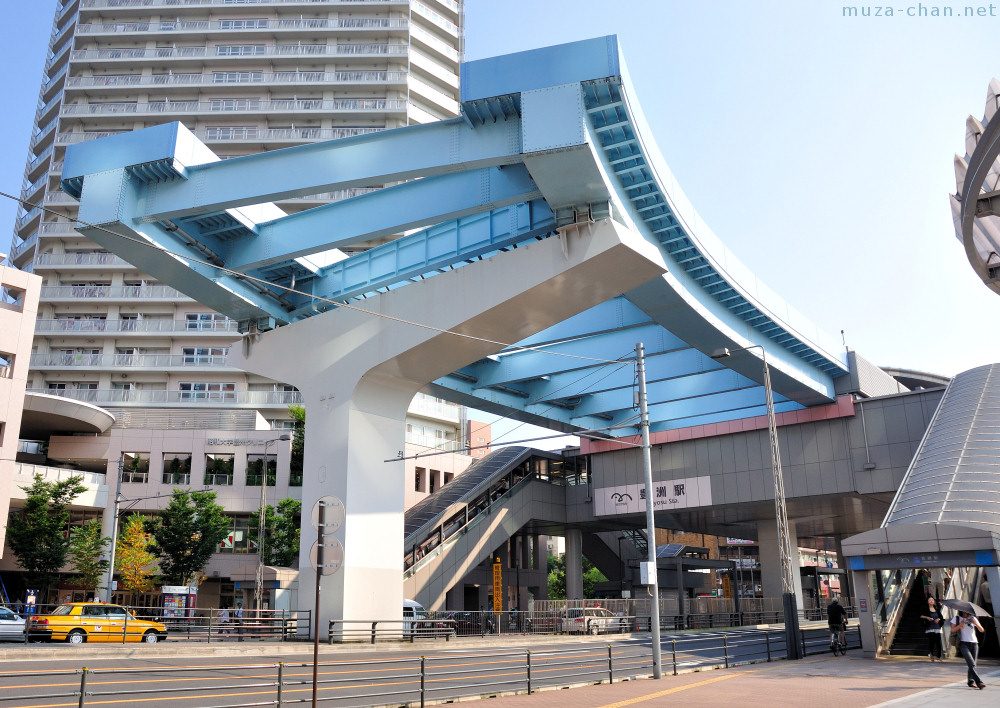
Take the Yurikamome Line to Shijou-mae Station.
Taxi · 30 min · Variable cost
Request drop-off at the Toyosu Market Management Building.
Since entrance is 0 JPY, there are no cancellation fees for market access. Please check your specific tour provider policy for guided experiences.
Recommended time
2-3 hours
Plan on 2-3 hours for a toyosu fish market tour auction visit, arriving between 05:00 and 06:30 since the tuna auction itself runs 05:30-06:30 and the observation deck fills fast once doors open. Budget the first hour for auction viewing, then add 60-90 minutes to walk the market corridors, browse stalls, and reach the wholesale area before the midday wind-down. Add extra time if you want a sit-down breakfast nearby; subtract time if you only want the auction and a quick corridor pass. Queue reality: the viewing platform has limited capacity, so latecomers after 06:00 often watch through glass from a secondary spot rather than the main window.
Crowd levels through the day
Weather · crowds · average price — dots go green to amber to red as each metric rises.
Mild temperatures make walking between buildings comfortable for visitors seeking a Toyosu fish market tour auction.
Cooler mornings are ideal for catching the peak tuna auction activity between 05:30 and 06:30.
Crowds are generally thinner, providing better visibility from the observation walkway for a Japan tuna auction visit.
Expect humid weather and higher tourist numbers during school holidays.
Aim to arrive by 05:00 to secure a good spot for the tuna auction observation.
Check Yurikamome Line schedules the night before to ensure a punctual arrival.
The market buildings can be chilly even in warm months due to refrigeration.
Observation walkways are clearly marked to guide visitors safely.
Verify the market is open before travel as closure days occur weekly.
Tokyo's wholesale fish trade traces its roots to the Edo period, when fishermen landed their catch along the banks of the Sumida River and sold it directly to buyers. In 1923, the Great Kanto Earthquake devastated the city's scattered fish markets. The Tokyo Metropolitan Government consolidated operations at a single site in Tsukiji, which opened in 1935 as the world's largest fish market. For eight decades, Tsukiji handled millions of tons of seafood annually, anchoring the city's culinary identity and drawing traders from across Asia. By the 1990s, Tsukiji's infrastructure had aged beyond repair. The wooden buildings lacked modern refrigeration, and narrow aisles could not accommodate rising traffic volumes. In 2001, the metropolitan government announced plans to relocate the market to Toyosu, a reclaimed industrial site three kilometers east. The decision triggered immediate opposition from traders who feared losing customer relationships and doubted the new facility's design. Soil contamination at Toyosu—a former gas plant—delayed construction for years while officials installed groundwater monitoring systems and sealed the site beneath concrete. The toyosu fish market tour auction finally began operations in October 2018, ending Tsukiji's 83-year run. The new complex spans three buildings totaling 407,000 square meters, equipped with temperature-controlled warehouses, expanded loading docks, and enclosed auction floors. Public observation decks replaced Tsukiji's chaotic visitor access, allowing tourists to watch the tuna auctions through soundproof glass. The relocation preserved the market's core function while modernizing its logistics, ensuring Tokyo's seafood supply chain could scale into the 21st century. Today, Toyosu processes over 480,000 tons of marine products annually, maintaining Japan's position as a global seafood hub.
Edo-period fishermen sell catches along Sumida River, establishing Tokyo's first informal fish markets
Great Kanto Earthquake destroys scattered markets, prompting government consolidation plans
Tsukiji Market opens as Tokyo's central wholesale fish facility, serving the capital for 83 years
Metropolitan government announces Toyosu relocation amid concerns over Tsukiji's aging infrastructure
Soil contamination discoveries at former gas plant site delay construction and trigger public health debates
Toyosu Market begins full operations with climate-controlled buildings and dedicated auction observation decks
Market handles 480,000+ tons annually, offering regulated toyosu fish market tour auction tours for international visitors
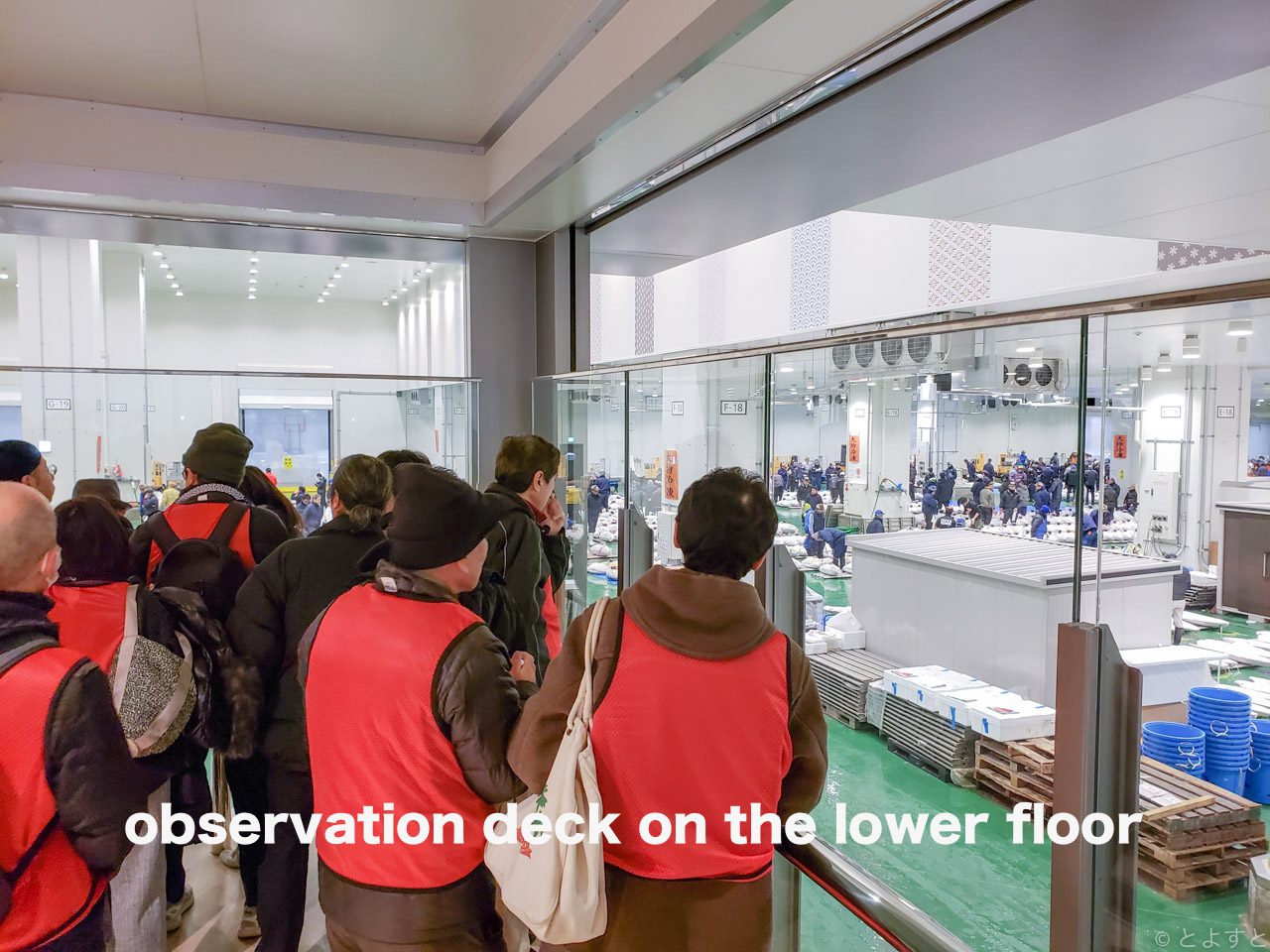
The elevated glass-walled corridor inside the Wholesale Tuna Market Building overlooks the auction floor where rows of frozen tuna are inspected and bid on before dawn buyers scatter. Stand at the window closest to the ramp entrance for the clearest sightline over the bidding lanes, part of the wider toyosu fish market tour auction experience. Glass reflection is heaviest near midday, so avoid shooting after mid-morning.
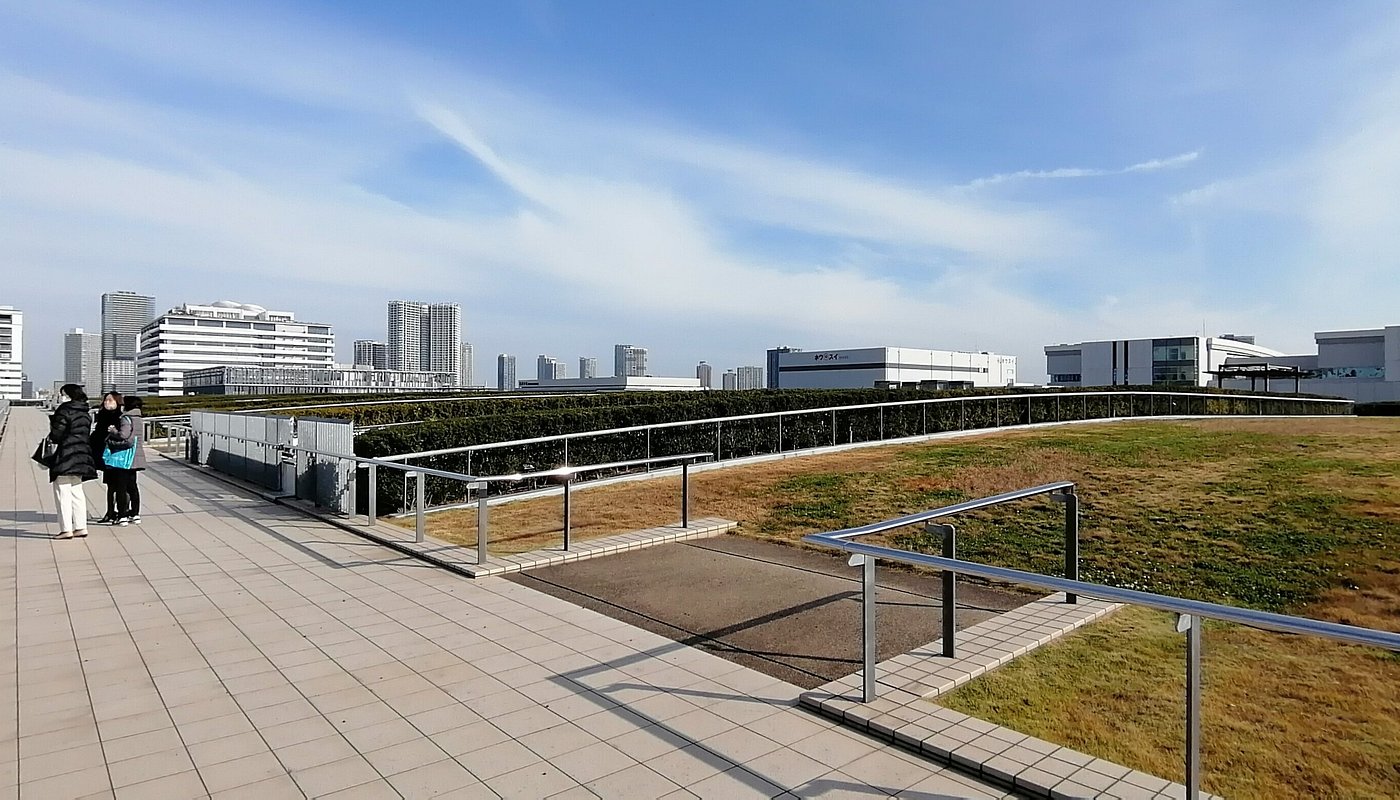
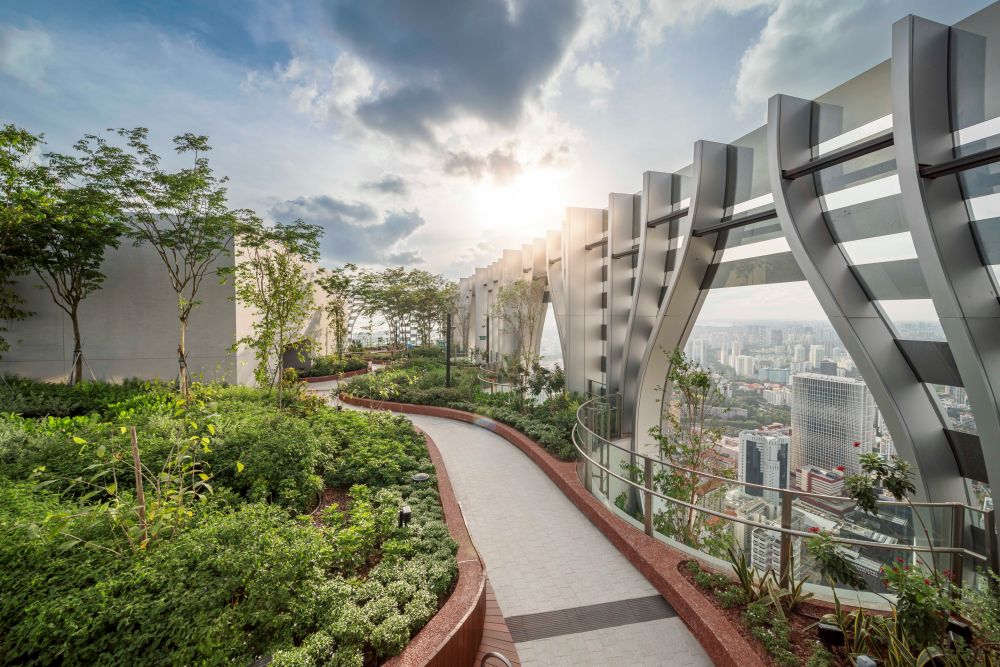
An open-air lawn deck atop the market building gives a wide, unobstructed view across the wholesale complex toward Tokyo Bay and the Rainbow Bridge in the distance. It's a good spot for establishing shots of the market's scale before or after an auction visit.
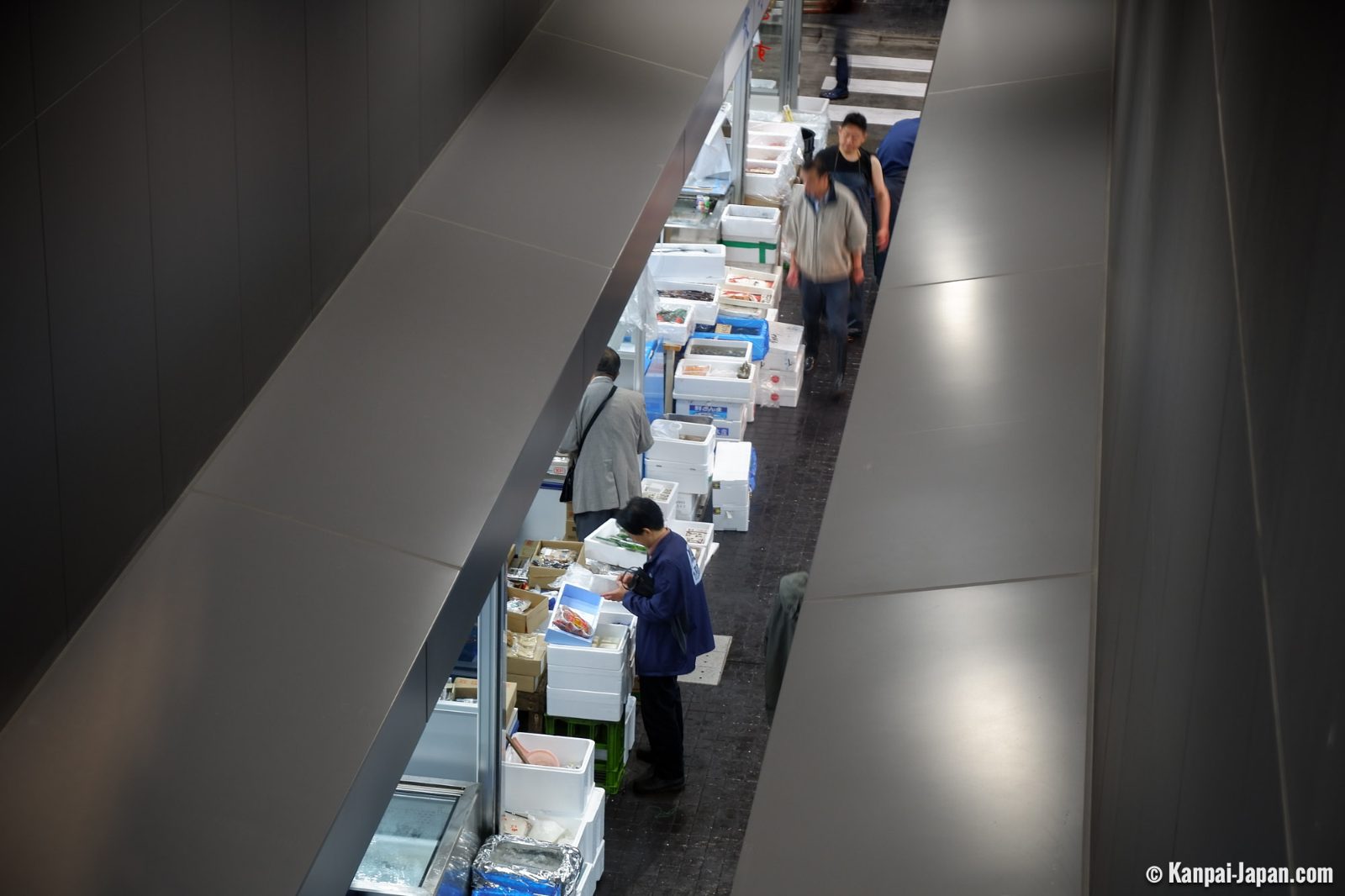
A long indoor gallery runs above the fish wholesale floor, letting visitors look down on forklifts, ice-packed crates, and vendors moving tuna and other seafood before the daily market opens. The corridor's mesh flooring and support beams make a strong foreground frame for wide shots.
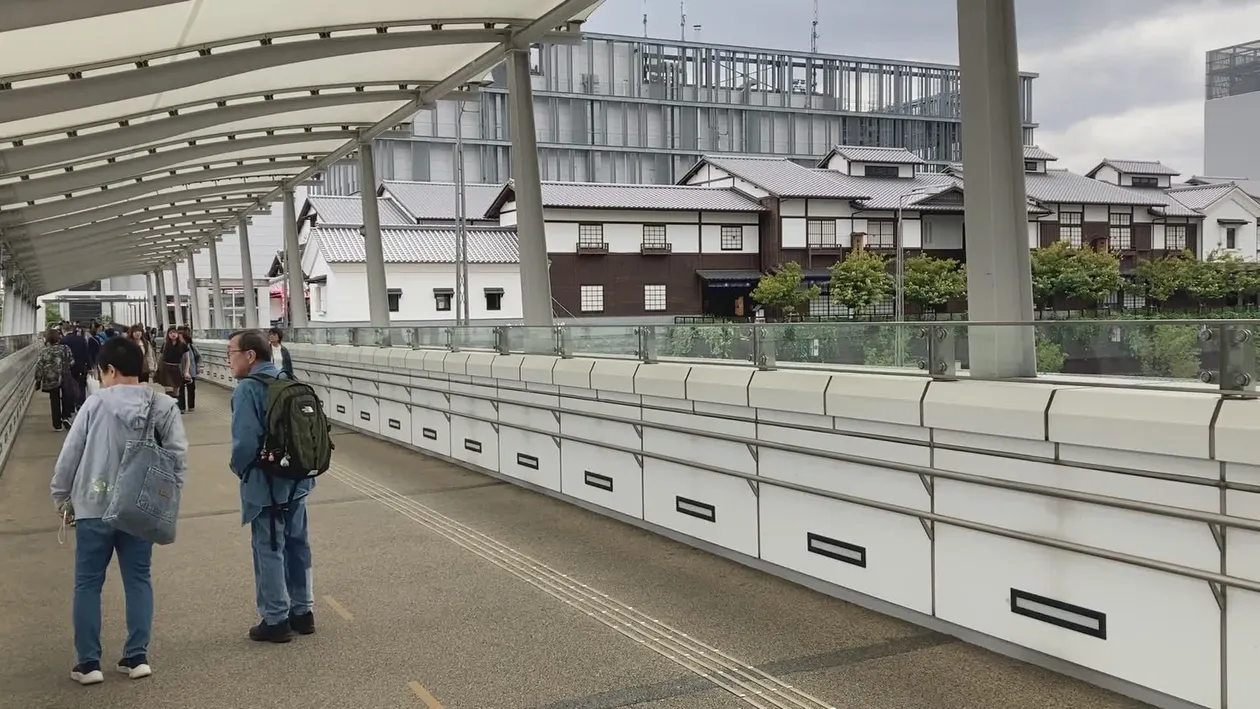
A connecting walkway between buildings offers an elevated, angled view down into the produce market's loading bays and delivery trucks, giving useful context shots of Toyosu's broader logistics beyond seafood.
From ground level outside the main entrance, the market's curved metal roofline and glass facade create a clean architectural shot with the building's scale visible against the sky.
A toyosu fish market tour auction with kids works best if you commit to the early wake-up call, since the tuna auction viewing deck is the whole point and it's only lively in the 05:00-06:30 window. Beyond that, this is a working wholesale facility with concrete floors and forklifts, so it suits curious kids who can stay close rather than toddlers who want to wander.
The observation corridors and elevated walkways are flat and stroller-friendly, but the market floor itself has narrow lanes with fast-moving carts, so a compact stroller or babywearing works better than a full-size one.
School-age kids (roughly 6 and up) get the most out of the glassed-in tuna auction viewing deck, since younger children may find the 05:00 start and the noise of the actual toyosu fish market tour auction overwhelming.
Baby-change and nursing facilities are limited inside the auction hall itself, but the adjacent Toyosu Senkyaku Banrai complex has proper restrooms and family-use rooms just a short walk away.
Plan on 30-45 minutes at the viewing deck since the tuna auctions typically run 05:30-06:30, then move kids on quickly as attention spans fade fast on concrete floors with no seating.
The observation walkways are indoor and covered, so a Toyosu Market tuna auction viewing tour stays fully doable in wet weather, unlike outdoor Tokyo landmarks nearby.
Because entry to the viewing deck is timed and capacity-limited, book toyosu fish market tour auction tickets in advance for a skip-the-line toyosu fish market tour auction tour rather than queuing at 4am with sleepy kids.
Visitors seeking fresh sashimi after a toyosu fish market tour auction will find numerous specialized sushi restaurants located directly within the market buildings. While many establishments cater to early risers near the primary Tokyo fish market landmarks, these venues fill up quickly, making early arrival essential for securing seating.
Renowned for its omakase sets featuring the freshest catch of the day, this spot often has a long queue before sunrise. It is a top choice for those looking for a traditional breakfast after engaging in toyosu fish market tour auction tours.
Everything you need to know for your journey
The best time to visit is between 05:00 and 06:30 to witness the tuna auction.
Entry to the market and observation walkways is 0 JPY.
The market is open from 05:00 to 17:00, Monday through Saturday.
You can arrange guided Japan market tours through authorized providers.
Yes, the facility is fully accessible to wheelchair users and visitors with mobility needs.
Bring comfortable shoes, a camera, and identification for your Toyosu Market visit.
Photography is allowed, but do not use flash near the auction traders.
Yes, families are welcome, but children must stay with adults at all times.
Take the Yurikamome Line to Shijou-mae Station for direct access to the complex.
No, food and drinks are not allowed on the observation walkways for hygiene reasons.
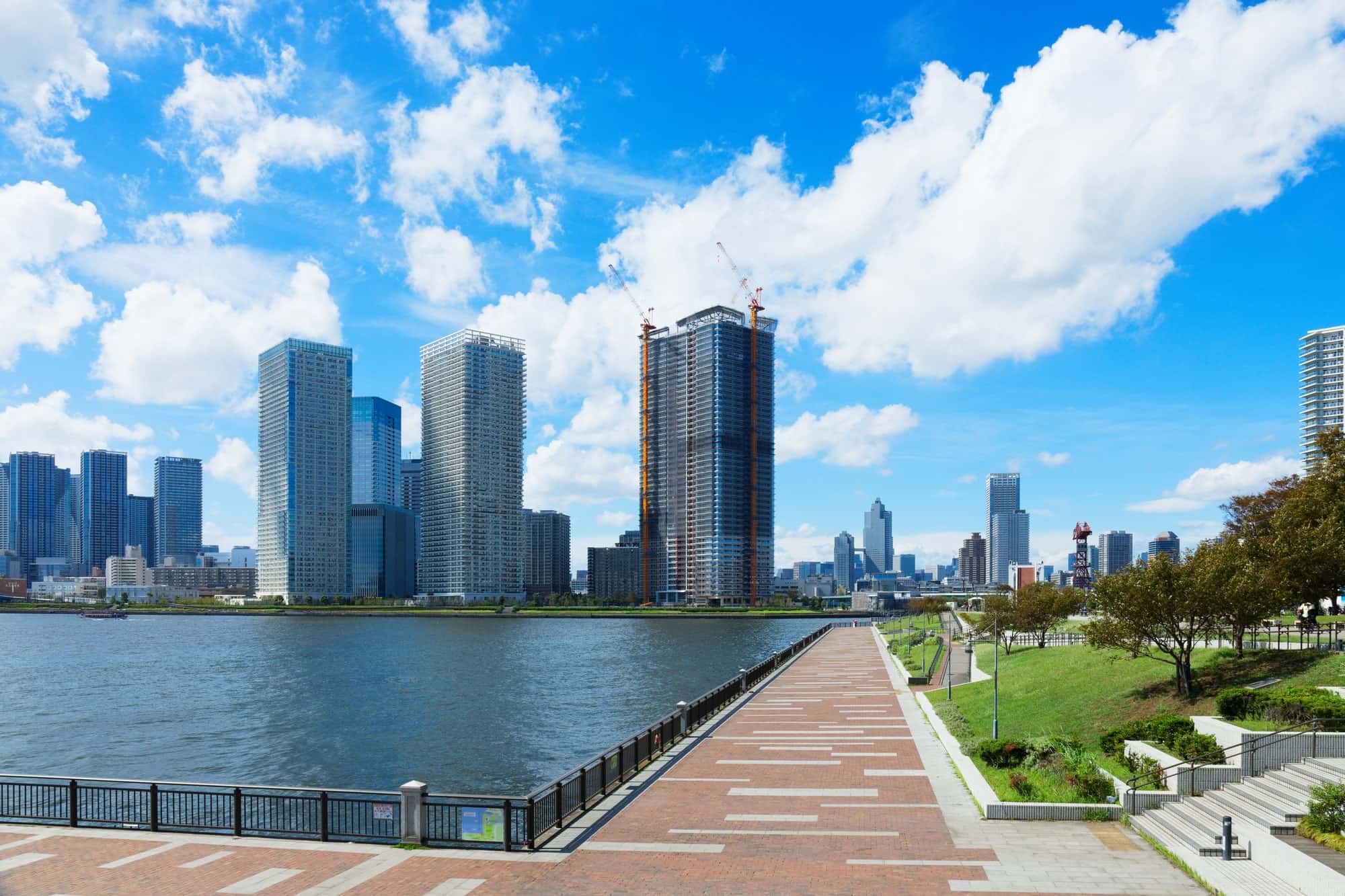
A scenic waterfront park offering views of the Tokyo skyline and Rainbow Bridge.
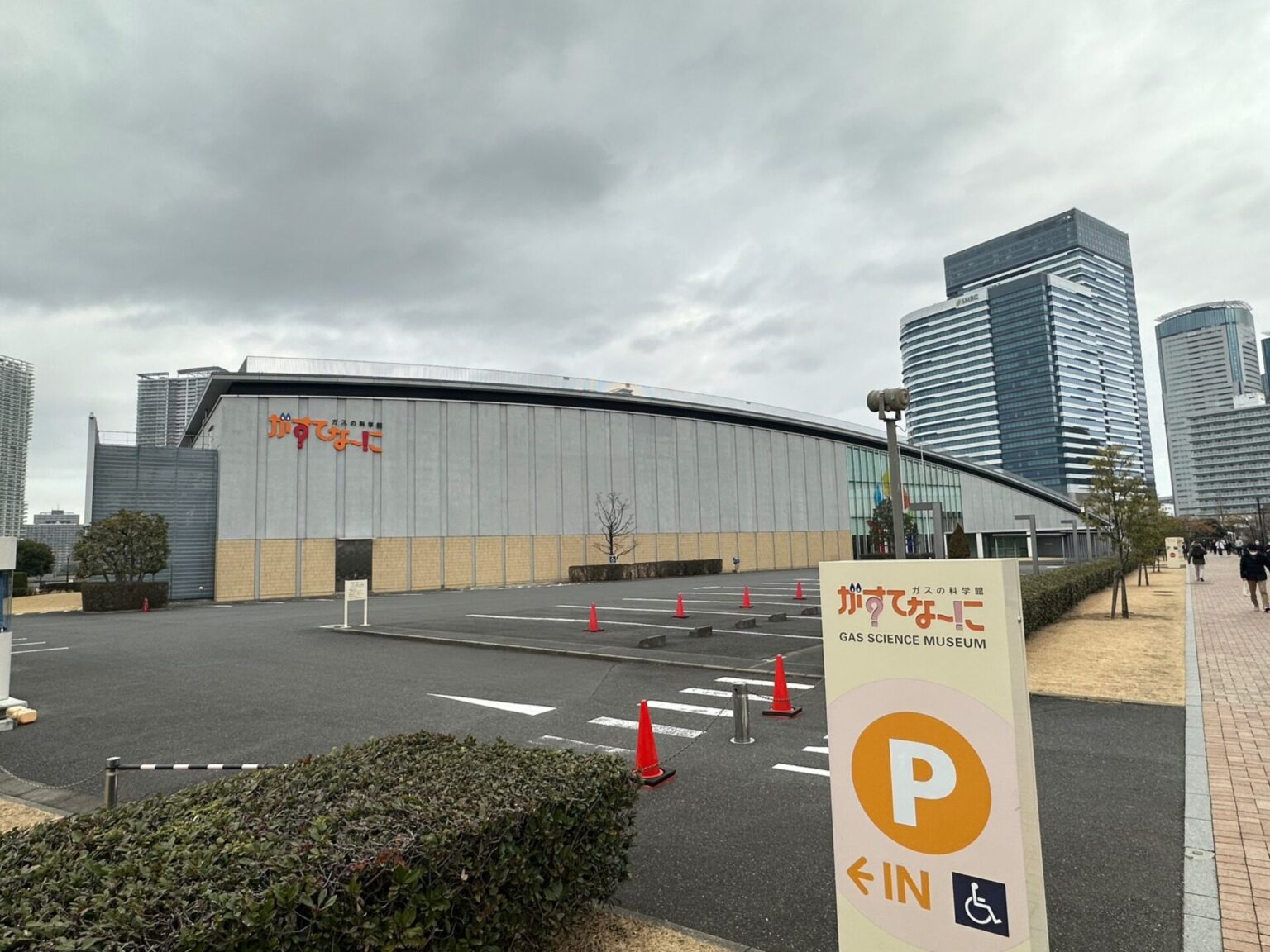
Interactive exhibits focusing on energy and science near the waterfront.
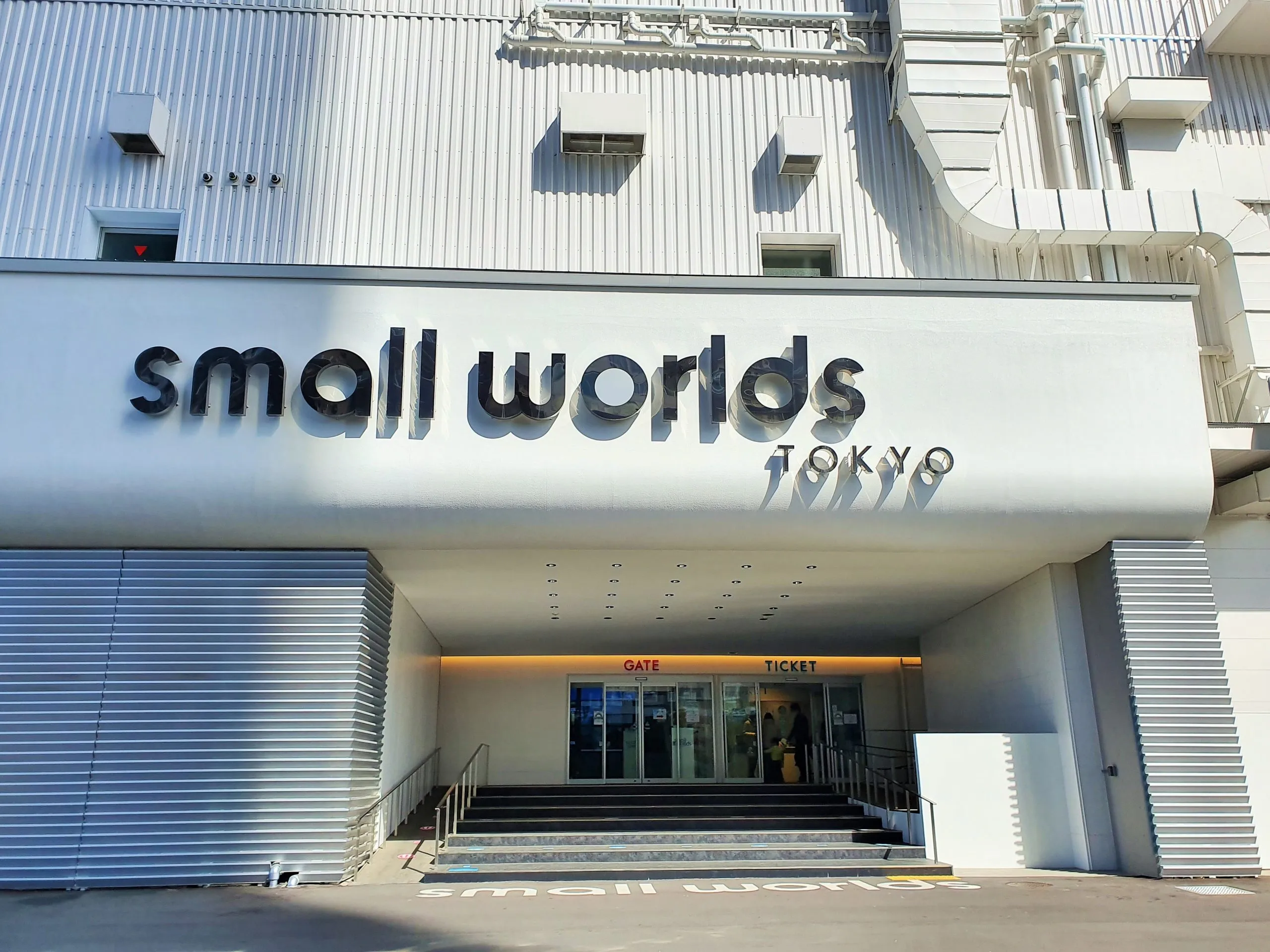
A miniature theme park featuring detailed dioramas and displays.
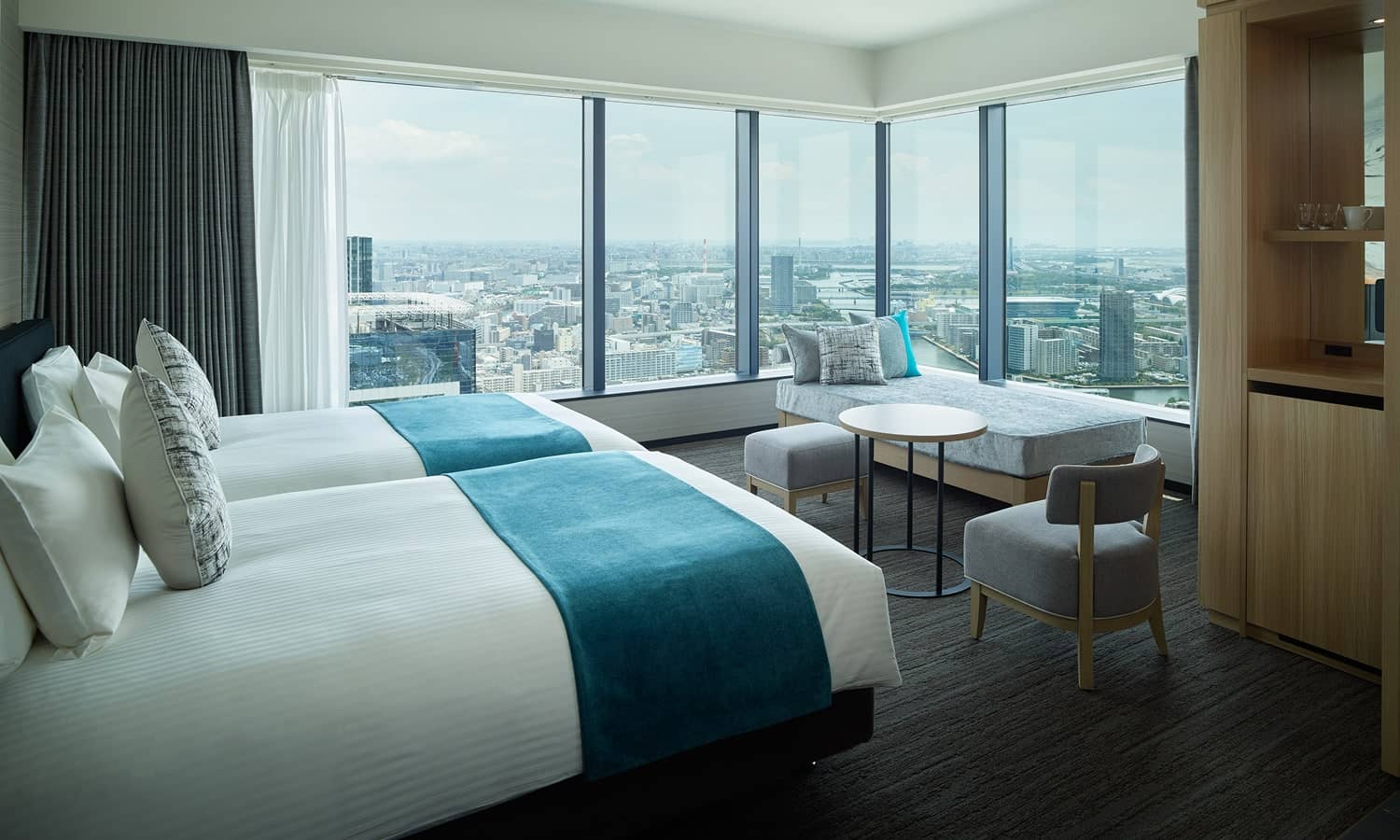
Convenient lodging near the station for early visitors.
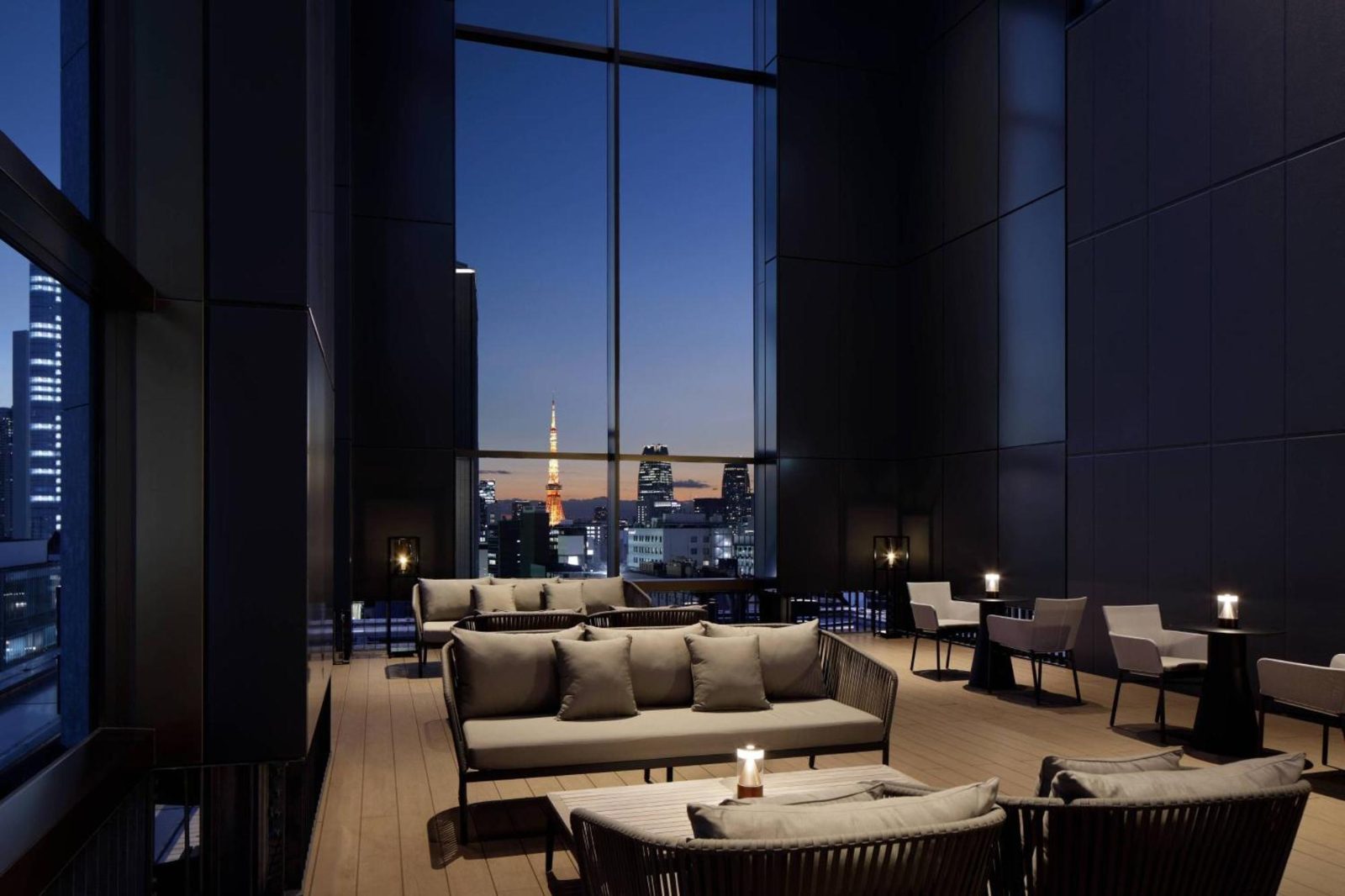
High-end hotels with easy transit access to the market.
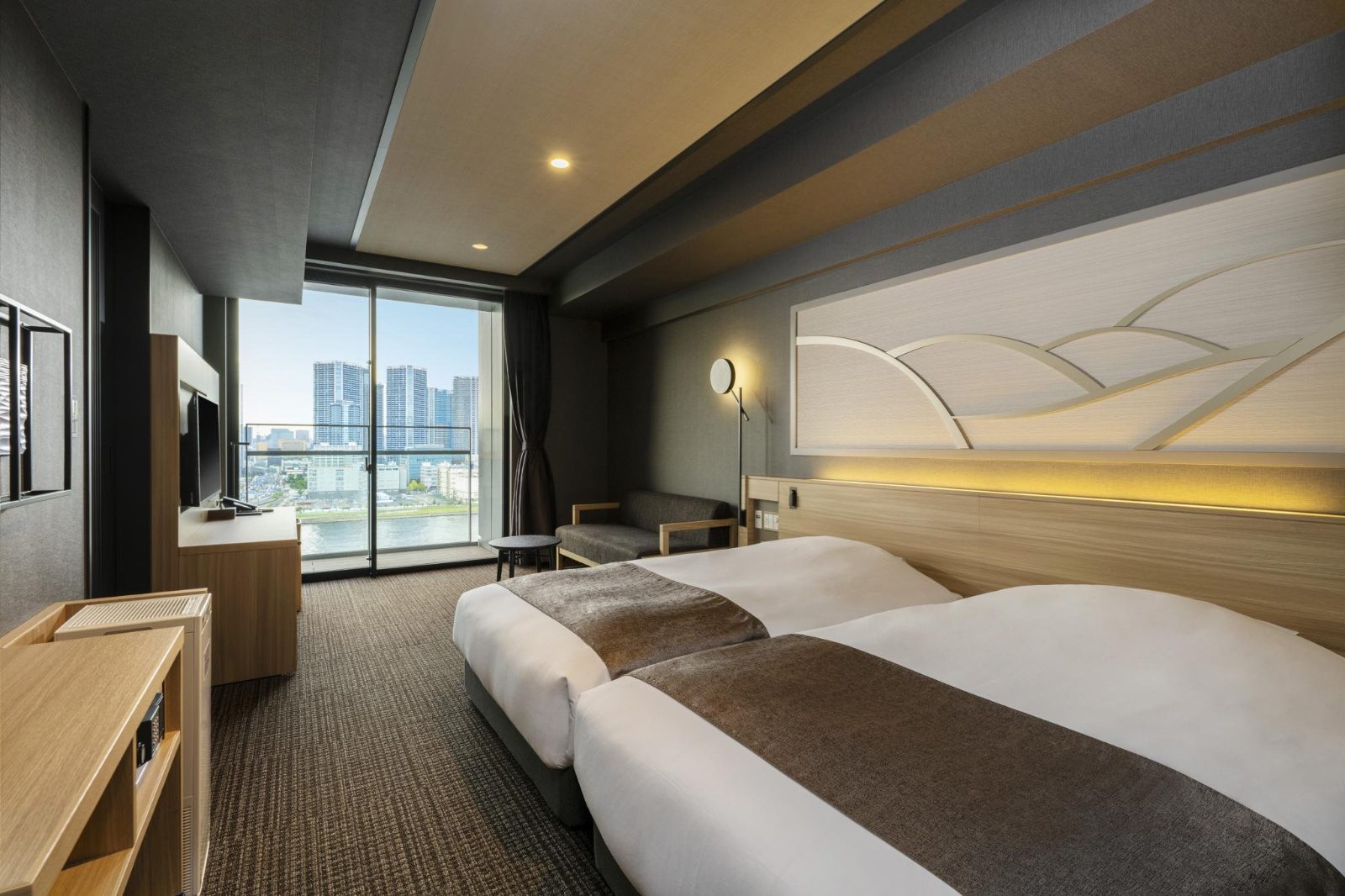
Range of business hotels offering good value for tourists.
Join thousands of happy travelers who have discovered this incredible experience
Book Your Experience Now